Industry News
Municipal Sidewalk Snow Equipment RFQ Documents Dealers Should Prepare
Dealers quoting municipal sidewalk snow equipment should prepare specs, route notes, safety items, manuals, warranty files and parts support before RFQs.
Municipal sidewalk snow equipment is rarely bought from a product photo alone. Public buyers, facility authorities and dealer purchasing teams usually need a file that lets them compare equipment, route conditions, safety expectations, warranty coverage and service support. A clean RFQ response is therefore not just a price sheet. It is a document package.
For dealers quoting compact walk-behind snow equipment, this is where preparation separates a serious package from a catalog reply. The buyer may not use the same vocabulary as the factory. They may ask for sidewalk equipment, a broom, a snow thrower, a plow, spare parts, manuals or proof that the machine will not damage surfaces. The dealer has to translate those requests into an equipment set that can be quoted, delivered and supported.
Start with the route and surface file
The first document should describe where the equipment will work. Sidewalk width, surface material, curb transitions, access points, storage area, snow-placement limits and response time all affect the correct attachment. A 2025 transit-facility RFQ from MAX, for example, required snow-throwing equipment on brick-paver sidewalks to use rubber blades to prevent surface damage, and it tied service to time-of-day and accumulation triggers. That is not a generic snow-equipment question. It is a route-specific equipment question.
The same lesson appears in sidewalk snow specifications from the City of Mitchell, South Dakota. The document calls for equipment to be in working condition, fitted with flashing amber lights, sized for the job, and not harmful to the sidewalk. It also separates equipment classes and requires the correct class for general sidewalk clearing. A dealer who knows these details before quoting can avoid proposing a machine that looks good on paper but is hard to approve.
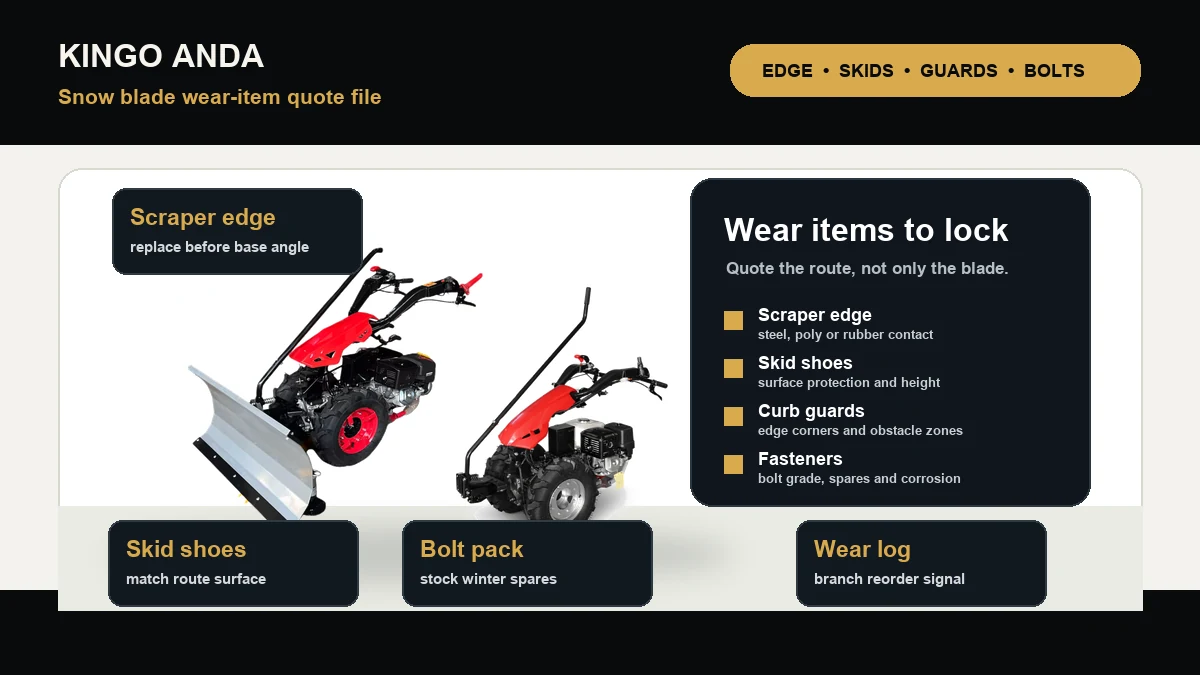
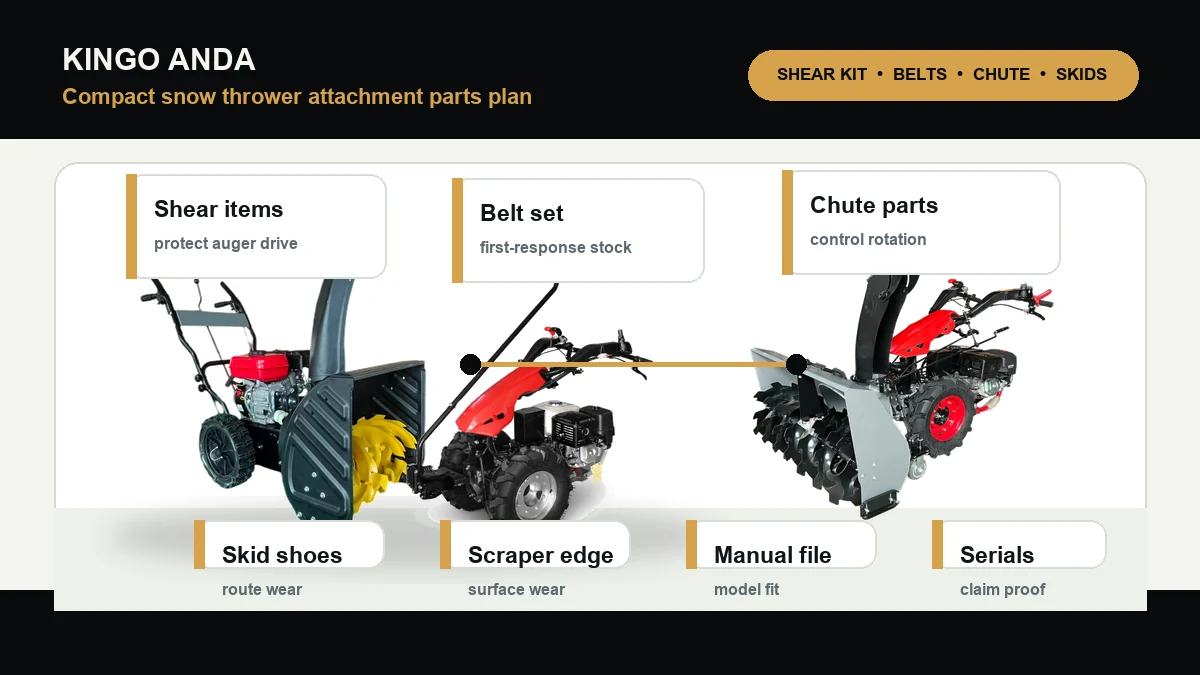
For KINGO ANDA, the route file should connect directly to the attachment set: sweeper, blade, thrower, broom head, skid shoes, scraper edge and spare-parts needs. The route defines the package.
Give the buyer a clear equipment specification
A municipal RFQ package should include a compact spec sheet that explains the power unit, attachment, working width, engine or drive information, operating controls, transport dimensions where relevant, replacement wear items and packaging. The Manchester-Boston Regional Airport 2026 snow removal equipment bid package shows how formal equipment procurement can be: it separates multi-tasking equipment with plow and broom, carrier vehicles, spreaders and an extended warranty item, with technical specifications behind each line.
Compact sidewalk equipment is smaller than airport SRE, but the buyer still needs comparable information. If one dealer sends only a product name and price, while another sends working width, attachment compatibility, support parts and document availability, the second dealer is easier to evaluate.
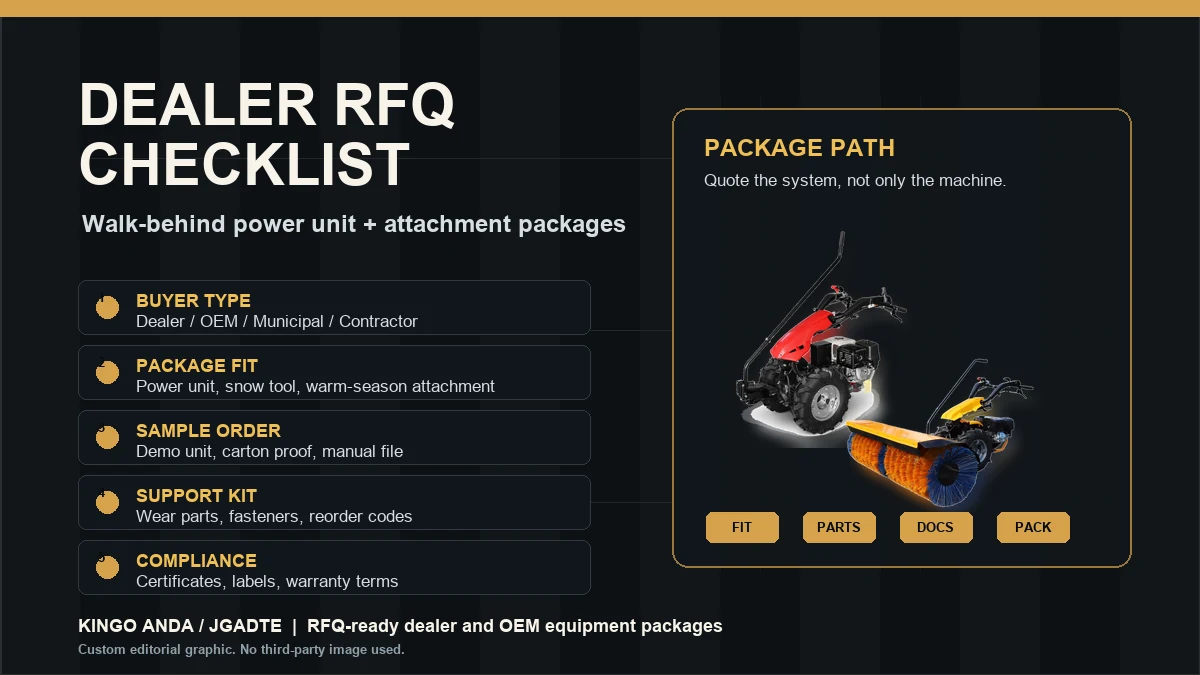
This is why the existing KINGO ANDA dealer RFQ checklist should be treated as a working document, not just a blog post. Dealers can use it to standardize model names, attachment combinations and support notes before the buyer asks for revisions.
Manuals, warranty and parts files reduce buyer risk
Many RFQs ask for more than equipment. They ask whether the supplier can support the equipment after delivery. Manchester’s bid package references manufacturer maintenance and service manuals, printed manual sets and notifications for software or parts updates. For a dealer, this points to a basic rule: do not wait for award-stage questions to prepare support documents.
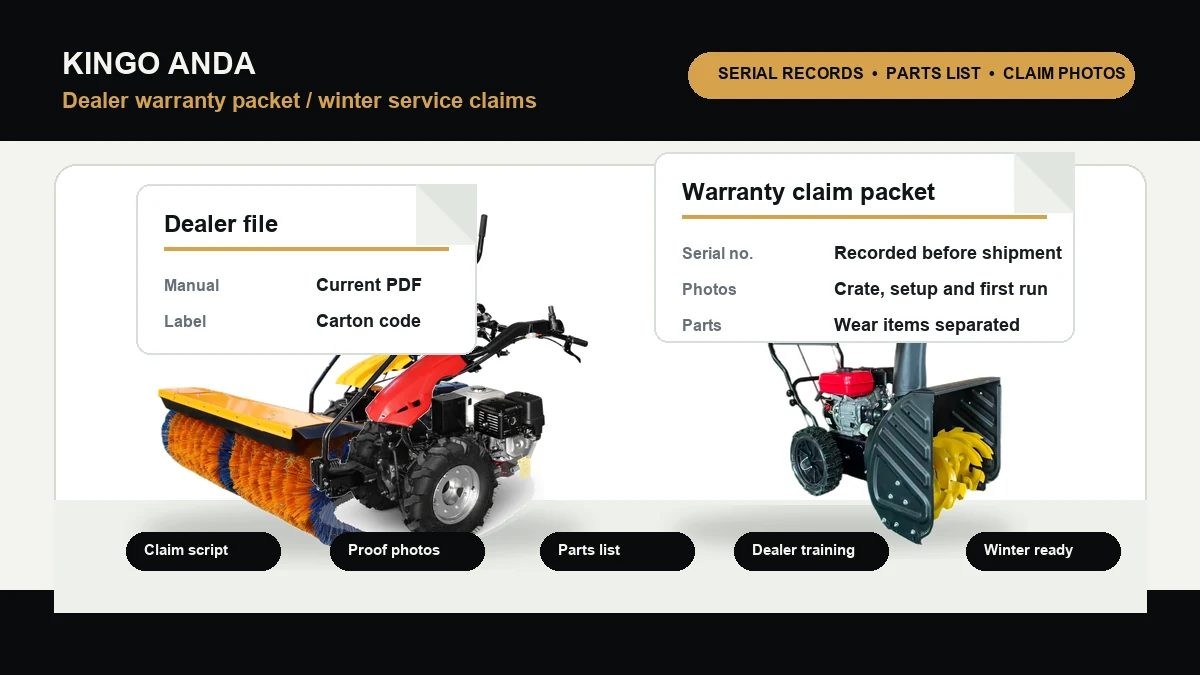
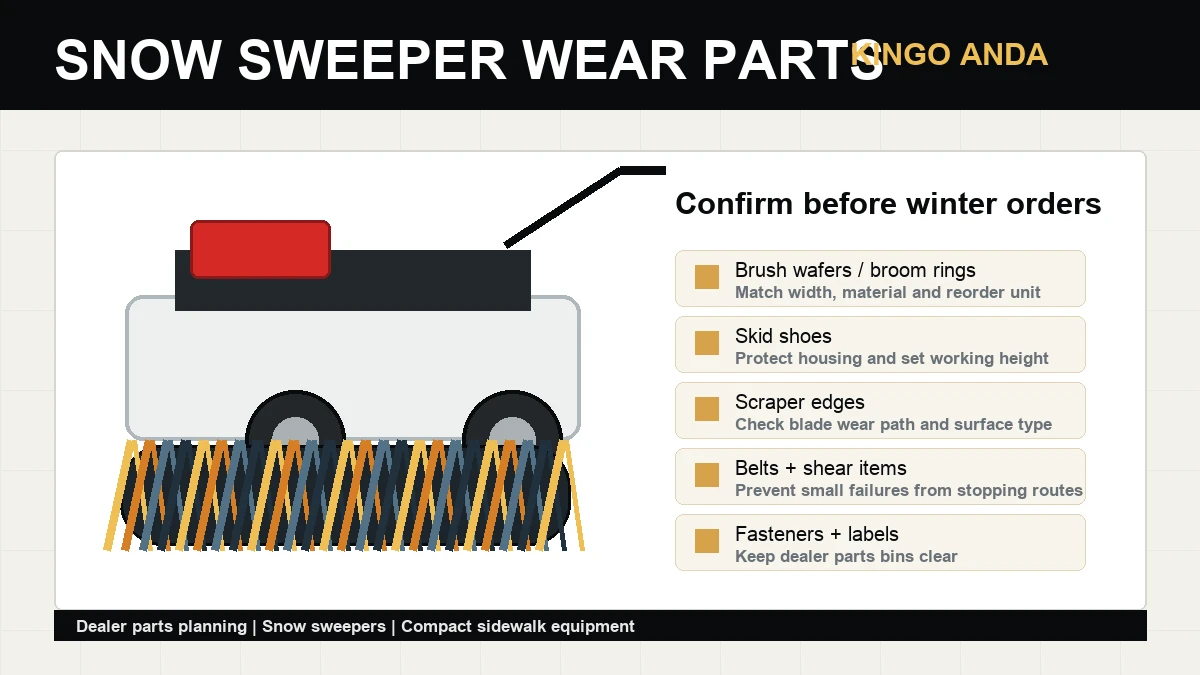
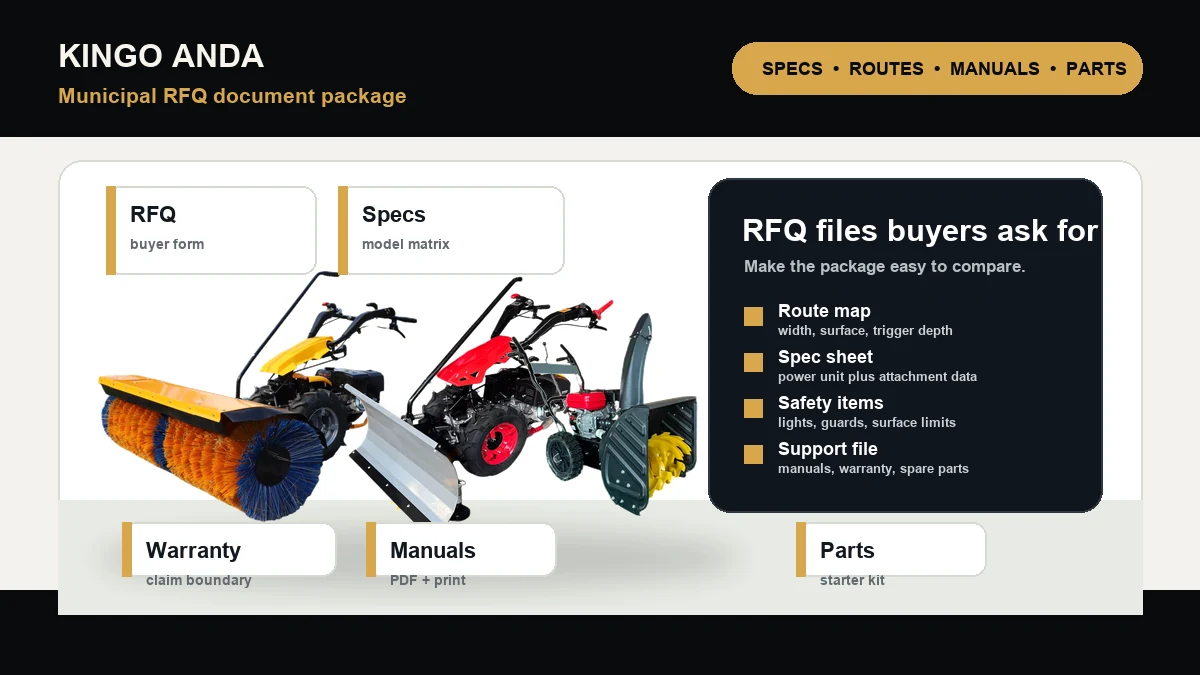
A practical municipal file should include the operating manual, parts list, warranty boundary, wear-item list, recommended first-season spare kit and a contact path for dealer support. If the buyer is comparing several offers, these documents help show that the package can be maintained after the first storm.
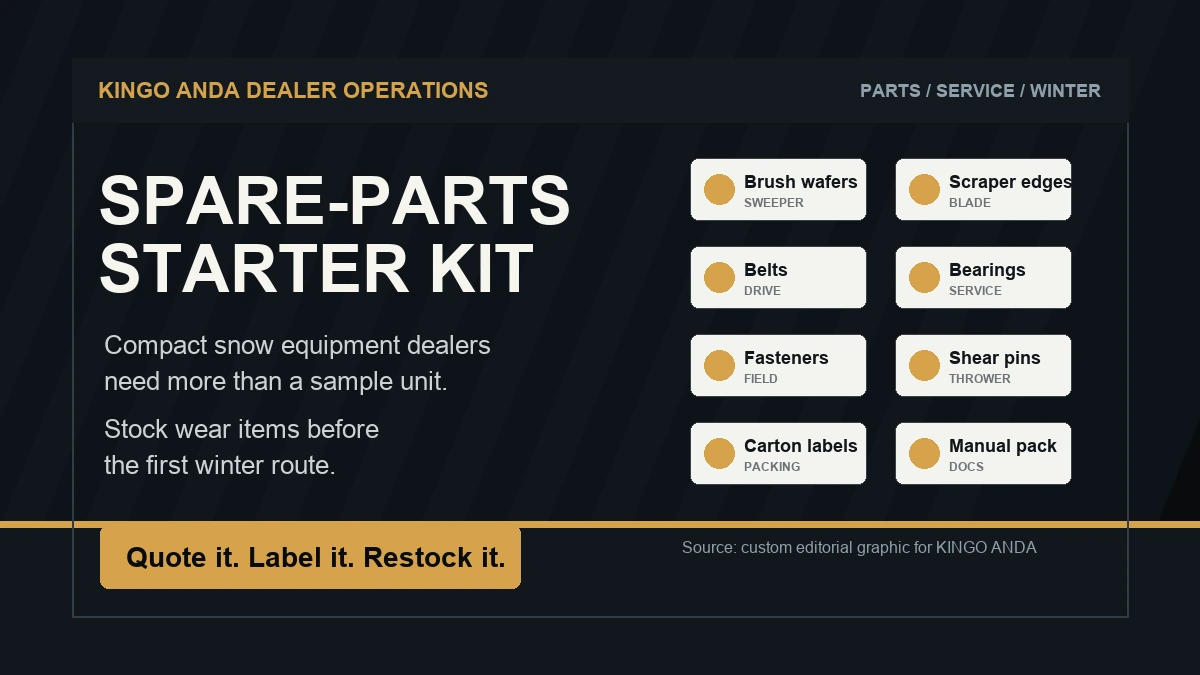
For KINGO ANDA posts already published, the relevant internal support links are the dealer spare-parts starter kit, warranty packet guide and snow blade wear-item checklist. These are the kinds of files municipal buyers expect a serious dealer to understand.
Safety and visibility items belong in the quote
Public facilities care about visibility, operator control and damage prevention. Mitchell’s sidewalk specification mentions flashing amber lights and equipment sizing. Trackless municipal tractor materials list safety-oriented features such as automated shutoffs, backup cameras, alarms, strobes, reflectors and lighting. Ventrac’s sidewalk snow page emphasizes maneuverability on sidewalks and attachment choices such as broom, blade, blower and spreader tools.
A compact walk-behind package will not have the same feature set as a cabbed municipal tractor. Still, the RFQ reply should state the safety-relevant items it does offer: route suitability, attachment guards, operator controls, surface limits, maintenance checks, lighting or visibility accessories if used, and the buyer’s responsibility to choose the right package for the site.
This is especially important when a buyer clears campuses, transit stops, public parking lots, schools or narrow commercial entrances. The question is not only whether the machine can move snow. It is whether the machine fits the route, protects surfaces and can be supported by the dealer.
Make the RFQ easy to compare
Public procurement often rewards clarity. MRSC’s procurement guidance points to examples of bid documents and notes that agencies should follow local policies and procedures; its sample references also show how specifications, supplier agreements, OEM or approved-equal language and standard terms appear in public purchasing files. Dealers do not need to write the buyer’s procurement policy. They do need to make their reply easy to evaluate inside that policy.
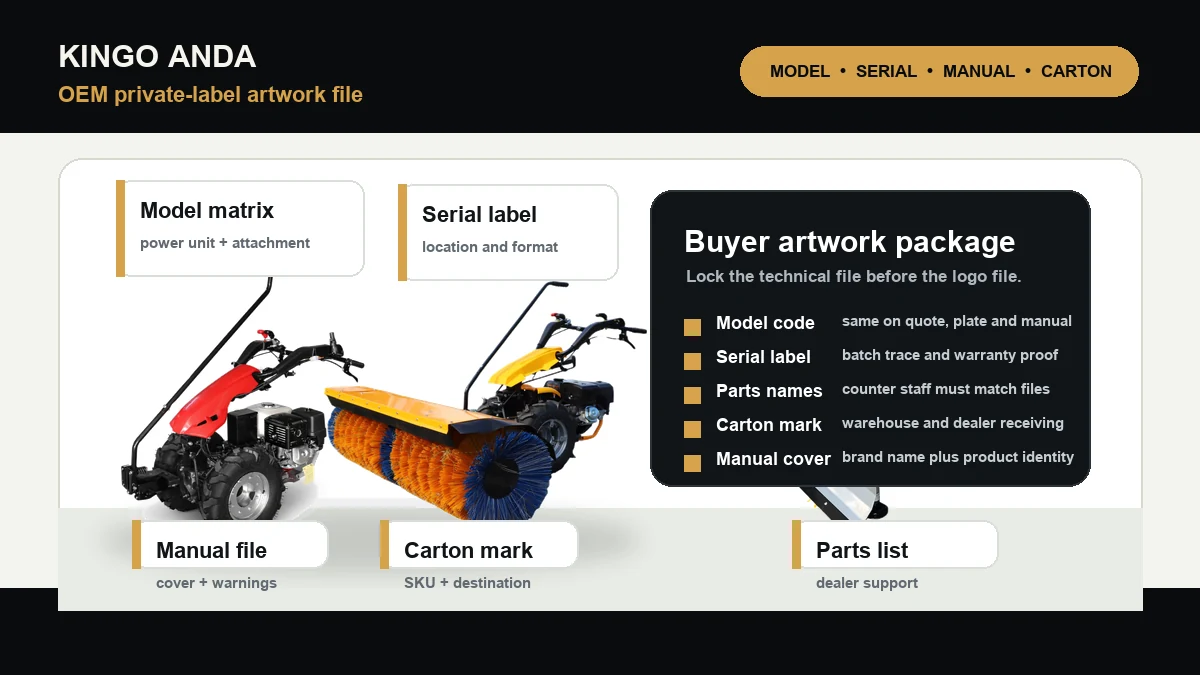
A useful compact snow equipment RFQ package should include: one cover quote, one model matrix, one route/attachment match, one spec sheet per attachment, one spare-parts recommendation, one warranty note, one manual/document list and one delivery/packing note. The file should use the same model names everywhere. The buyer should not have to reconcile different names across the quote, catalog, manual and carton label.
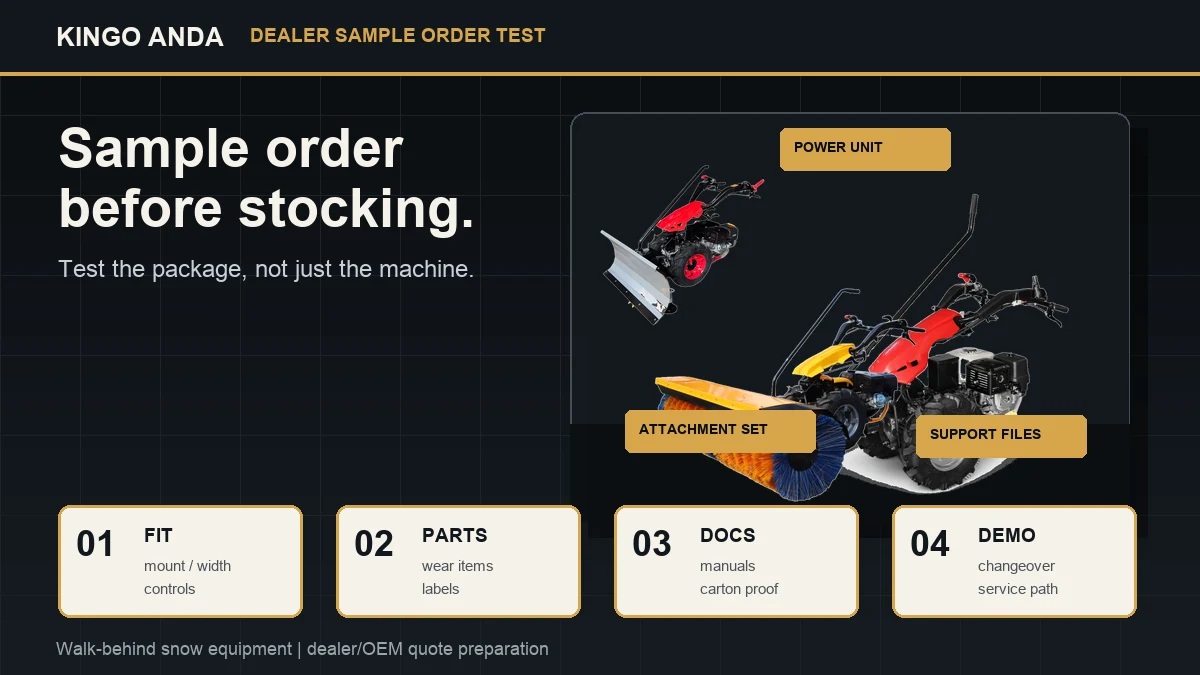
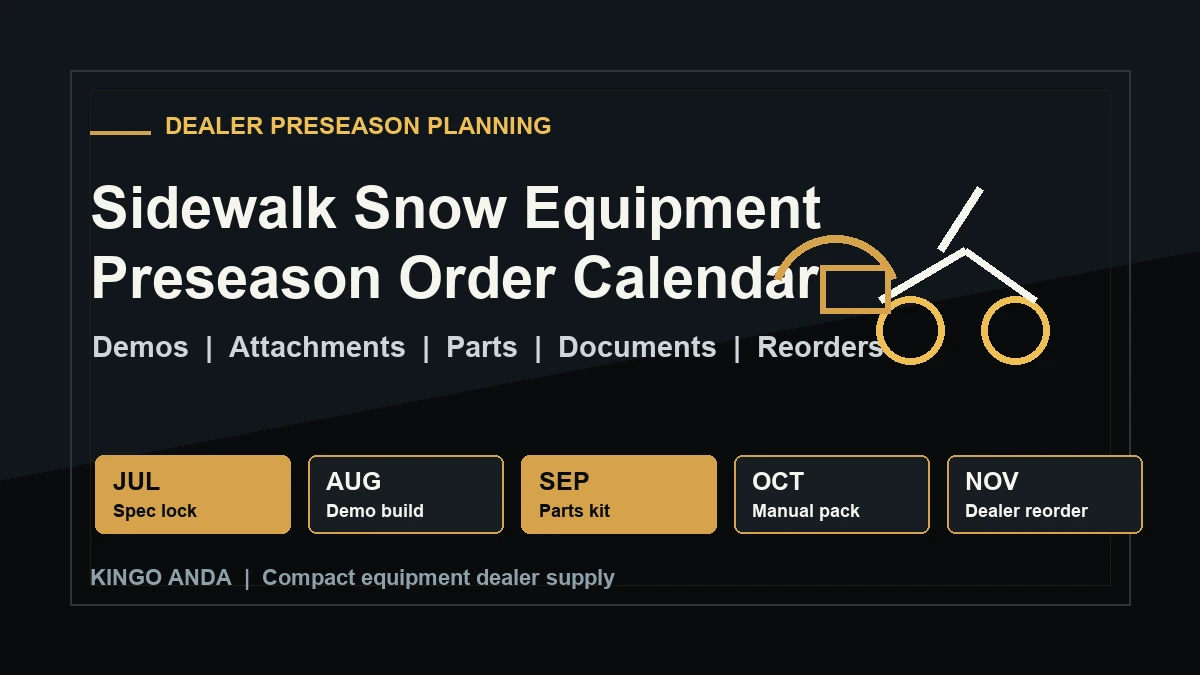
Dealers preparing a municipal or facility quote can also link the RFQ package to preseason order timing and sample-order testing. Those two steps help buyers approve the package before the winter window is already tight.
Dealers, OEM buyers and municipal suppliers can send route type, buyer requirements, target attachments and document expectations through Build Your Package. KINGO ANDA can prepare the right compact snow equipment file before the formal RFQ deadline.
Prepare the RFQ file before the deadline.
Share the route, surface, attachment set and document requirements. KINGO ANDA can support the dealer quote path with the right package file.
Industry references checked: Manchester-Boston Regional Airport 2026 snow removal equipment bid package, MAX snow removal RFQ, City of Mitchell sidewalk snow specifications, Ventrac sidewalk snow management page, MacQueen Trackless municipal tractor page, MRSC procurement guidance.