Industry Products
Compact Snow Thrower Attachment Parts: What Dealers Should Stock Before Winter
Dealers stocking compact snow thrower attachments should separate shear items, belts, skid shoes, chute parts and manuals before winter demand hits.
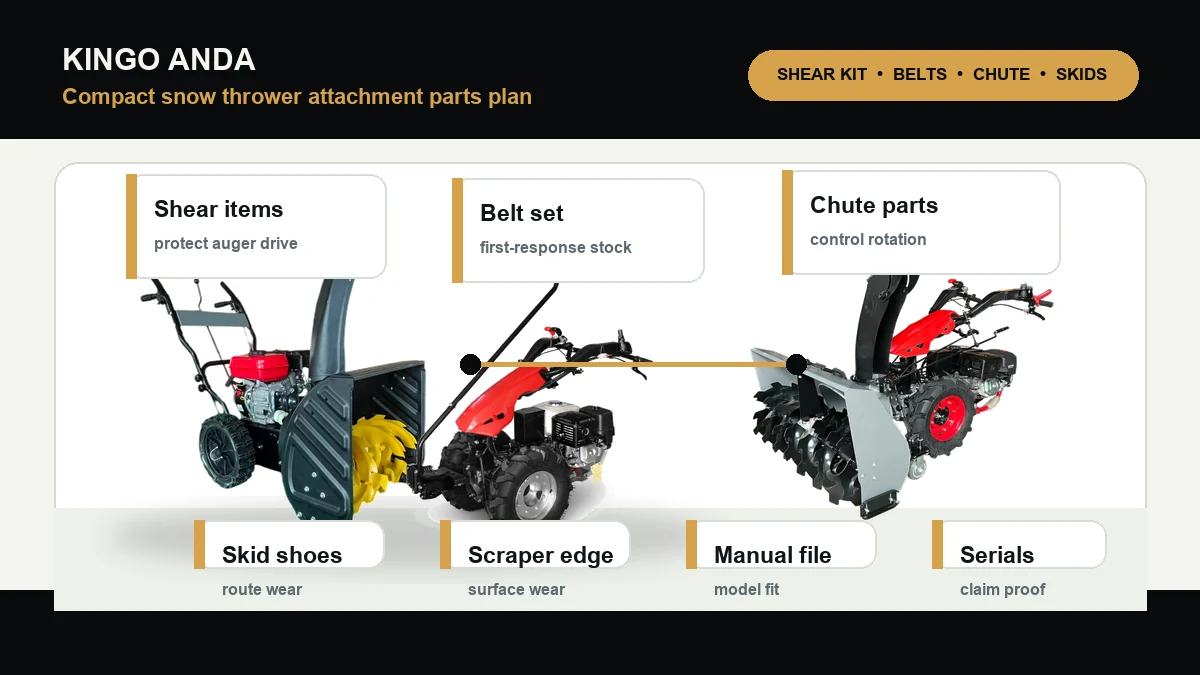
A compact snow thrower attachment can sell as a simple winter add-on, but it is not a simple support item. Once a dealer puts the attachment into a sidewalk, campus or property-maintenance program, the parts conversation starts immediately: shear items, belts, chute controls, skid shoes, scraper edges, fasteners, manuals and model-fit records.
Dealers that prepare those parts before the first storm look organized. Dealers that wait until an auger stops turning or a chute handle binds end up using winter service time to build a parts system they should have had in September. For compact equipment, the inventory does not have to be large. It has to be correctly separated, labeled and tied to the power unit and attachment model.
Start with model fit, not parts volume
The first question is not how many parts to buy. It is which attachment version, power unit and connection package the dealer is actually supporting. BCS lists snow thrower attachments with compatible tractor models and notes required connection accessories such as a PTO extension or quick hitch. That is the right frame for any dealer program: parts planning follows the matched system, not a generic snow-blower shelf.
For KINGO ANDA, this means the dealer should map the compact snow thrower attachment to the selected walk-behind power unit, coupling point, working width, chute-control layout and intended route. A dealer selling to sidewalk contractors may need a different starter pack than a dealer selling to estates, schools or small municipal crews.
The same rule belongs in the quote process. Before asking for a container price, the buyer should confirm attachment fit, first-season spare parts, manual files and carton labeling. The dealer RFQ checklist is the best internal link for that step.
Stock shear items and belts as first-response parts
Shear items and belts should be treated as first-response parts, not emergency discoveries. Ariens maintenance guidance reminds owners to remove shear pins before greasing augers and then replace the shear bolts after lubrication. Ariens operator material also treats broken shear bolts as a normal response when an obstruction stops auger rotation, with OEM replacements recommended.
That does not mean every compact thrower uses the same hardware. It means dealers should not open winter with a vague note saying “order later.” The starter kit should identify shear bolts or pins by model, compatible fasteners, belt set, pulley or tensioner references where applicable, and the expected restock path. If a dealer sells the attachment as part of a private-label or regional program, that part naming has to be clear in the manual and parts sheet.
Cub Cadet’s parts catalog is useful as a public benchmark because it separates snow blower belts, shear pins, slide shoes, cables, friction wheels, discharge chutes and auger gearboxes into distinct categories. A dealer does not need to copy that retail structure, but the same separation helps counter staff find the right item quickly.
Treat chute, skid shoe and scraper wear as route-specific
Thrower attachments fail in different ways depending on the route. A paved campus sidewalk, a mixed gravel estate lane and a municipal path with curb edges do not put the same wear on skid shoes, scraper edges and chute controls. BCS describes adjustable skids on its snow thrower as a way to set height for surfaces such as gravel or rocky routes. That surface detail should be visible in the dealer’s setup conversation.
For a compact program, put route type into the parts plan. If the buyer is clearing abrasive surfaces, the skid-shoe and scraper-edge line matters. If the operator frequently changes direction near parked cars, chute-control parts and handle protection matter. If the buyer runs wet snow, the dealer should pay attention to chute cleanliness and the fasteners around the discharge path.
This article pairs with the earlier KINGO ANDA piece on snow sweeper wear parts. Sweepers and throwers do not consume the same parts, but the dealer habit is the same: name the wear items before winter, not after the first service complaint.
Keep manuals, serials and service notes in the same file
Parts support is only as good as the file behind it. BCS maintains service information, bulletins and operator manuals for tractors and attachments, including model and serial-number guidance. For compact equipment dealers, that is not just a manufacturer service habit. It is a sales-support habit.
Every stocked snow thrower attachment should have a basic dealer file: model, serial or batch record, matched power unit, first shipment date, carton label, exploded-parts reference if available, service-parts starter kit, warranty boundary and photo record. If the attachment is being sold under an OEM/private-label arrangement, the file should also include the buyer’s item code and manual-cover naming.
This connects directly to the dealer warranty packet published yesterday. A warranty claim without model and serial records becomes slow. A parts counter without a parts naming system becomes expensive. The two documents should be built together.
Put the parts kit into the dealer quote
Compact snow equipment demand is moving toward smaller routes and mixed fleets. Sno-Way’s 2026 trend note points to more compact equipment for walkways, HOA properties, campuses and municipal sidewalk networks, alongside continuing labor pressure. Those buyers do not want a parts mystery. They want the dealer to support the package after the first snowfall.
The dealer quote should therefore include more than the attachment price. It should show the power unit, thrower attachment, connection accessories, first-response parts kit, wear-part list, manual file, carton-label requirements and restock contact. The kit can be modest, but it must be clear.
Dealers preparing compact snow thrower orders can use Parts & Service and the spare-parts starter kit guide as planning references. For a quote path, send the target market, attachment set, route type and expected winter volume through Build Your Package.
Build the attachment quote with parts included.
Share power unit selection, route type, thrower attachment and first-season volume. KINGO ANDA can align the quote with parts and documents.
Industry references checked: Sno-Way 2026 snow removal trends, BCS snow thrower attachment information, BCS service bulletins and manuals, Ariens snow blower maintenance guidance, Cub Cadet snow blower parts categories, Ariens operator manual shear-bolt guidance.