Dealer Support
Dealer Warranty Packets for Compact Snow Equipment: What to Prepare Before Winter Claims
Dealers stocking compact snow equipment should prepare serial records, parts lists, photos and service rules before winter warranty claims start.
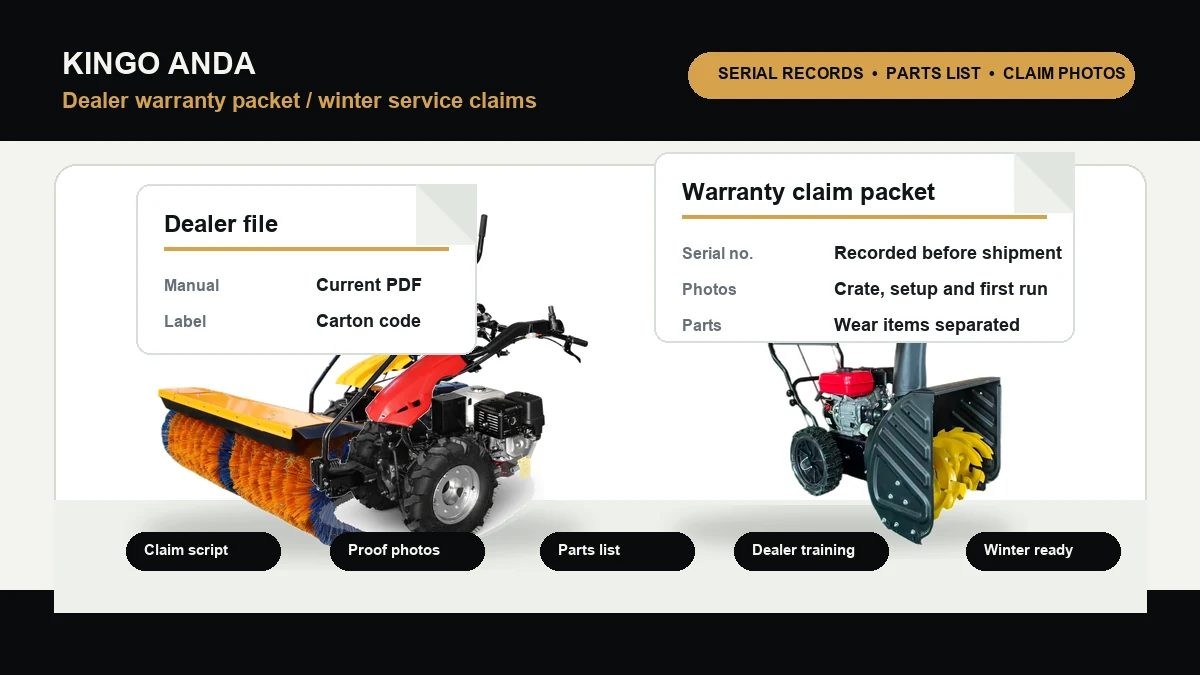
A dealer warranty packet is not paperwork for the back office. In winter equipment, it is part of the product. When the first storm hits, the dealer counter is dealing with cold machines, impatient contractors, municipal buyers, missing serial numbers and photographs taken after the damage already happened. If the packet is weak, every small claim becomes a longer argument.
Compact walk-behind snow equipment makes this more important, not less. These machines often work on sidewalks, campus paths, HOA routes, shop fronts and other tight-access jobs where operators change frequently. Dealers stocking a power unit, snow sweeper, blade or compact thrower should prepare the warranty and service file before the season starts. By the time claims arrive, it is already late.
Put serial numbers and purchase records in the same packet
The first rule is simple: the dealer should be able to match a machine, an attachment and a sale without searching through three systems. M-B Companies’ manual library is a useful reminder because the company asks buyers to provide the serial number when they need specific assistance. That is standard equipment practice, but many small programs still treat serial numbers as an afterthought.
For a walk-behind program, the dealer file should record the power unit serial number, attachment serial or batch code, invoice date, carton label, buyer name, delivery photo and setup notes. If the attachment can move between power units, make that visible. A later claim on a sweeper brush, belt guard or snow-thrower housing will be easier to judge when the dealer knows exactly which unit carried which attachment.
That record belongs in the same commercial package as the dealer RFQ checklist. A clean RFQ names the buyer type, first-season attachment set and expected annual volume. A clean warranty packet proves that the same package can be supported after it ships.
Treat wear parts separately from warranty parts
The second mistake is mixing normal wear with warranty discussion. Snow sweepers, blades and throwers have parts that should wear: brush wafers, scraper edges, skid shoes, belts, shear items, pins, fasteners and guards. A dealer should stock those parts and explain them up front. If every worn scraper edge is handled like a warranty claim, the program will lose time and credibility.
Green Industry Pros’ snow-season preparation guidance puts spare parts directly into preseason work: inspect equipment and stock items such as hoses, pins, belts and electrical parts before the season starts. The lesson carries over to compact equipment. The supplier should help the dealer decide what goes into the starter kit and what belongs in the warranty language.
KINGO ANDA dealers can pair this packet with the dealer spare-parts starter kit and the snow sweeper wear-parts checklist. The warranty file should not pretend these parts do not exist. It should define them clearly.
Record photos before the first storm, not after a claim
Photographs are strongest when they are boring. The dealer should capture the crate, carton mark, machine condition, attachment mount, guard clearance, control position and first setup before the unit leaves the shop. Those photos are useful for dealer training, but they also protect the warranty process when a later claim involves transport damage, missing hardware or incorrect assembly.
Do not wait for a broken unit to start documenting the program. A preseason photo set gives the supplier, dealer and buyer a shared reference. It also helps when a dealer is building a private-label or regional stocking program, because the carton mark, manual cover, label language and attachment naming can be checked before the first pallet order.
For B2B buyers, this is not cosmetic. BOSS presents genuine parts, manuals, registration and dealer service as part of the ownership path. Compact equipment suppliers should learn from that structure. A product page can sell the machine, but the support packet keeps the dealer from looking unprepared when the season gets busy.
Give counter staff a claim script
A good warranty packet should include the words a dealer counter needs to use. The script does not need to be theatrical. It should ask for the model, serial number, attachment, purchase date, operating condition, photos, failed part, hours or job count if available, and whether the item is a known wear part. It should also tell staff when to send the buyer to parts support instead of opening a warranty claim.
RPM Tech’s after-sales page points to technical support, training, dealer/service network and maintenance support around snow equipment. That is the right direction for a dealer program. Training is not only factory-to-technician; it is also counter-to-customer. The buyer should hear the same answer whether they call sales, parts or service.
KINGO ANDA’s Parts & Service page should be used as the public route for this message. The dealer packet can then carry the internal version: who receives the claim, what files are required, which photos are mandatory and what response time the dealer should expect.
Make the supplier packet part of the RFQ
Warranty documents should not be requested only after a container ships. Dealers should ask for the packet during the RFQ stage, especially when the order includes multiple attachments or an OEM/private-label requirement. The supplier should be able to provide current manuals, part names, carton-label examples, serial-number rules, basic warranty language, claim photo requirements and recommended first-season spare parts.
Sno-Way’s 2026 trend note describes continued pressure around efficiency, labor and compact equipment for campuses, HOA properties and municipal sidewalk networks. Those are dealer markets where downtime creates immediate complaints. A supplier that can show warranty discipline before the order will be easier to trust when the first winter call comes in.
Dealers preparing winter stocking orders can send buyer type, target market, power unit selection, attachment set and expected volume through Build Your Package. Ask for the warranty packet, spare-parts starter list and sample-order support file in the same request. KINGO ANDA can prepare the right catalog set and quote path for dealer, OEM or municipal supply programs.
Ask for the support packet before winter orders.
Share your target market, attachment set and stocking volume. KINGO ANDA can align the quote with parts, manuals and warranty documentation.
Industry references checked: Green Industry Pros snow-season preparation guidance, RPM Tech after-sales support, BOSS genuine parts and dealer support, M-B Companies manuals and serial-number support, Sno-Way 2026 snow removal trends.