Industry Products
Snow Blade Attachment Wear Items: Scraper Edges, Skid Shoes and Fasteners
Dealers quoting compact snow blade attachments should confirm scraper edges, skid shoes, curb guards, fasteners and route surfaces before winter orders.
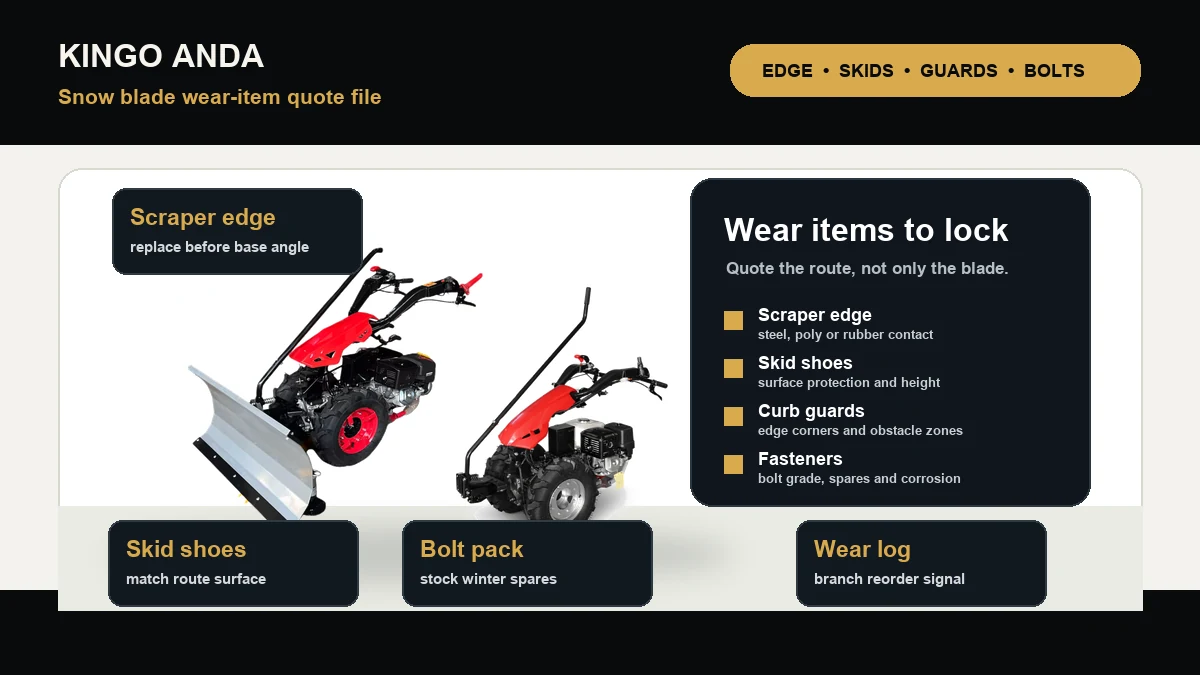
A compact snow blade looks simple in a catalog. A moldboard, a mounting point and a working width are easy to compare. The order becomes more serious when a dealer has to support the blade through a full winter. The real quote is not only the attachment. It is the scraper edge, skid shoes, curb guards, fasteners and route surface that decide whether the blade can be sold and serviced cleanly.
That is why snow blade wear items should be discussed before the preseason order is placed. A buyer who asks only for blade width and price will usually come back later for edge material, replacement hardware, shoe height and surface notes. Those late questions slow down the order, and they leave the dealer counter with weak information when the first storm arrives.
Start with the surface the blade will scrape
Western’s cutting-edge guide makes the practical point that wear is affected by contact pressure, climate, surface conditions, speed and edge material. That is a useful way to brief a compact-equipment dealer. The same snow blade can have very different wear behavior on smooth concrete, broken asphalt, pavers, gravel shoulders or municipal sidewalks with raised joints.
For a KINGO ANDA snow blade attachment, the quote should therefore describe the expected route before the buyer chooses the wear pack. The dealer may need a harder steel edge for long paved runs, a softer edge for sensitive surfaces, or a clearer skid-shoe setup for mixed pavement. A small walk-behind package does not remove this decision. It just makes the support file more important because the buyer may be serving branch stores, contractors or municipal crews with different route conditions.
KAGE also points to skid shoes as surface-protection parts and discusses blade features such as trip edges and floating moldboards that reduce strain when a blade hits uneven ground. For compact equipment, the dealer should know whether the route includes curb lips, frost-heaved slabs, driveway transitions or older sidewalk panels. That information belongs in the RFQ, not in a service call after delivery.
Scraper edges should be treated as scheduled stock
Hiniker’s maintenance guidance stresses that the cutting edge is in continuous contact with the ground, and that wear, cracking, corrosion and loose hardware should be checked through the season. This is the part of the blade most likely to turn into a branch-level reorder. Dealers should not wait until the first replacement request to learn the edge type and bolt pattern.
A practical dealer kit should state the working width, edge material, thickness, hole spacing, bolt size and whether the edge can be reversed. If the blade is sold into a region that uses salt or brine, corrosion around hardware should be assumed. A small spare bolt pack is cheap compared with a machine that cannot go back out because one missing fastener holds up an edge change.
This is the same logic behind the KINGO ANDA dealer spare-parts starter kit. Edge wear is not a surprise failure. It is a normal support item, and it should be stocked like one.
Skid shoes and curb guards protect the sale after delivery
Skid shoes are easy to overlook because they are not the largest or most visible part on the attachment. In use, they help set blade height, protect surfaces and reduce how aggressively the edge bites into uneven ground. If the buyer is clearing pavers, decorative concrete, parking-lot transitions or municipal sidewalk sections, the skid-shoe question should be handled before shipment.
Curb guards deserve the same treatment. Blade corners often take the hit when operators work near curbs, loading areas and building entrances. A quote that includes the guard style and replacement path gives the dealer a cleaner answer when customers ask how the blade will hold up around hard edges.
Trackless writes about municipal winter attachments in the context of sidewalks, uneven surfaces, frost heave and public safety. The equipment category is different, but the operating lesson carries over: winter attachments need to protect the operator, the machine and the public route. For a compact snow blade, that means the wear package should match the actual route environment.
Fasteners are part of the blade, not an afterthought
A snow blade order should include the fastener specification that holds the wear edge and guard parts. Dealers need to know the bolt grade, nut type, washer setup and whether any parts are treated for corrosion resistance. If the edge is reversible, the fastener pack should support that service event. If the attachment is going into a fleet account, the buyer may want enough hardware for the first replacement cycle.
BOSS lists replacement cutting edges for compact vehicle blades and separates different materials for different use cases, including steel and polyurethane options. That kind of parts clarity is what dealers need from the supplier side as well. A blade sold without a clear parts line becomes harder to support even when the attachment itself is sound.
The fastener discussion also belongs beside the snow sweeper wear-parts checklist and the compact snow thrower parts guide. Dealers do not buy one attachment in isolation. They buy a winter support system.
Put the wear-item file into the RFQ
The cleanest quote path is a short wear-item file attached to the RFQ. It should list the target route, blade width, edge material, edge dimensions, skid-shoe style, curb guard need, fastener pack, first-season spare quantity and any surface restrictions. That file gives purchasing, service and branch staff the same reference point.
It also helps the supplier quote the right package. A buyer asking for a dealer program may need extra consumables, carton labeling, parts names and reorder references. A municipal buyer may care more about route durability and service records. An OEM buyer may need the wear-item file to match the private-label parts list.
For preseason planning, connect this article with the dealer RFQ checklist and the sidewalk snow equipment preseason order calendar. The earlier the wear items are locked, the fewer support questions appear after the first storm.
Dealers, OEM buyers and municipal suppliers preparing compact snow blade packages can send route type, blade width, expected annual volume and first-season spare requirements through Build Your Package. KINGO ANDA can align the attachment quote with a cleaner winter support path.
Quote the blade with the wear pack.
Share the target route, buyer type, attachment set and spare-parts expectation. KINGO ANDA can prepare a dealer-ready quote path.
Industry references checked: Hiniker snow plow maintenance guidance, KAGE snow blade selection guidance, BOSS compact vehicle blade accessories, Trackless municipal winter attachment safety article, Western cutting-edge selection guide.