English trade-editorial updates from KINGO ANDA

Snow Sweeper vs. Compact Snow Thrower: Which Sidewalk Route Fits Each?
Compare snow sweepers and compact snow throwers using route evidence, confirmed model limits, attachment compatibility and a practical dealer approval brief.
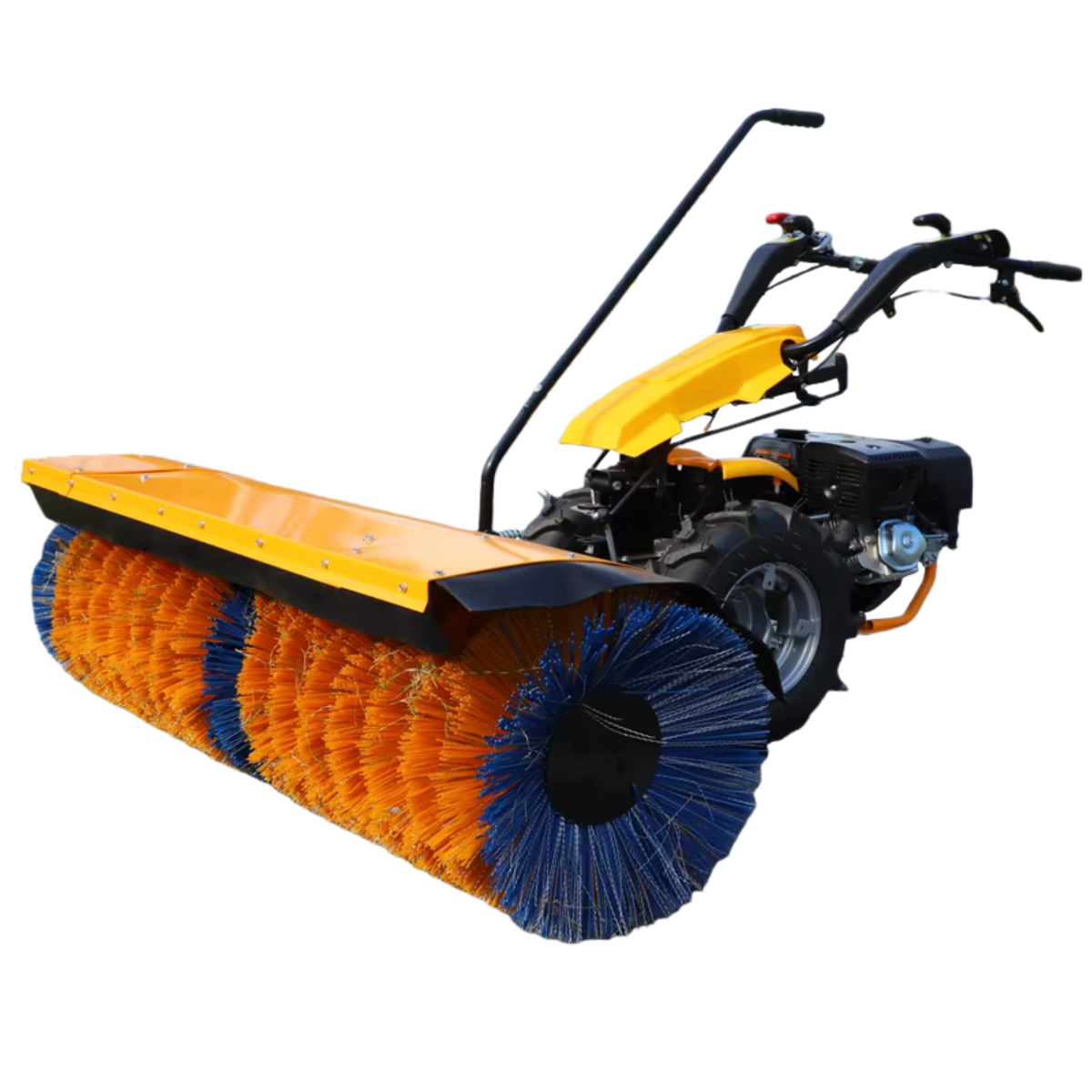
A snow sweeper and a compact snow thrower should not be ranked from their names alone. For a sidewalk buyer, the useful comparison starts with the route: what material must be moved, where it may go, which access points constrain the machine and what the supplier can confirm for the proposed model. A quote without those details leaves the buyer comparing assumptions.
This guide separates KINGO ANDA’s published product descriptions from the questions that still need a model-specific answer. It is intended for equipment dealers, municipal procurement teams and property-maintenance buyers preparing a comparison or sample request, not as a substitute for operator instructions or a site’s winter-response plan.
Start with the capabilities the product pages actually establish
The Snow Sweeper, P002, is described as a rotating brush attachment for sidewalks, yards, estates and light commercial snow clearing. The Compact Snow Thrower, P006, is described as a compact snow throwing unit for residential, estate and property-maintenance channels. Those descriptions establish different equipment categories and intended markets, not a head-to-head performance result.
The public descriptions do not establish a universal snow-depth threshold for switching tools, a guaranteed throwing distance, surface protection, route speed or comparative operator effort. Do not translate the word “compact” into a measured clearance, or infer that every product in the catalog connects to the same power unit. Ask the supplier for the exact specification and configuration being quoted.
A useful comparison sheet therefore has two columns: documented information and confirmation required. A dealer may explain the published brush and snow-throwing categories, while keeping application limits and performance questions open until supporting information is available.
Describe snow placement as carefully as the route width
Record the narrowest clear opening on the route, including gates, bollards, parked-vehicle constraints and the approach to storage. Include turning areas and measured references in the photographs. The open sidewalk section is only part of the route the equipment must negotiate; the complete proposed configuration needs to be checked against the access requirement.
Then mark the areas where removed material is permitted to go. Ask the site’s responsible contact to identify entrances, pedestrian crossings, vehicle areas and other locations that cannot be treated as available snow-placement space. Do not assume that a thrower resolves limited storage space, or that a sweeper avoids every placement constraint. The supplier needs the actual layout and proposed task to assess suitability.
Describe the snow conditions the buyer expects, using observations or records where available. Separate loose accumulation, previously moved material and packed layers in the inquiry rather than treating them as interchangeable. Surface type, slopes, obstructions and occupied surroundings also belong in the review. Operating limits and protective procedures must come from the exact model’s instructions, not from this buying guide.
Confirm whether the quotation is for an attachment or a complete unit
KINGO ANDA describes the Multifunction Power Unit, P001, as a main unit for interchangeable front and rear attachments across winter and warm-season work. Its public information states that attachment compatibility is confirmed by inquiry. The shared catalog is not proof that P002 and P006 both fit any particular version of P001.
Ask what each line item includes: a complete machine, an attachment, a power unit or a package of separately identified components. Require the proposed model identifiers, connection method, necessary hardware and supplied setup items to appear in the quote. Where the customer already owns equipment, provide a readable model-label photo and connection-area photographs.
If one matched platform is proposed for several tasks, request the approved combinations in writing. If separate units are proposed, evaluate their individual access, storage and documentation requirements. Neither arrangement should be presented as automatically simpler, faster or cheaper without evidence for the buyer’s actual work.
Use an approval brief instead of an unsupported winner
A dealer can make the comparison actionable without declaring a winner before the facts are available. Put the following items beside each proposed configuration:
- Route evidence: measured access points, surface notes and photographs of the full work and transport route.
- Material and placement: the expected snow conditions, permitted placement areas and unresolved site restrictions.
- Model response: the supplier’s suitability assessment, documented limitations and any task the proposed equipment is not approved to perform.
- Package definition: exact equipment identifiers, included hardware and any separate items required for the confirmed configuration.
- Support evidence: available operator/setup documents, parts identification and the agreed process for questions or faults.
For a sample evaluation, agree on the questions it is intended to answer and follow manufacturer-approved conditions and instructions. Record the model identifiers, conditions, observations and outstanding issues. A successful observation on one route does not establish a general snow-depth rating or performance guarantee on another.
Keep commercial terms separate from technical acceptance. The product pages direct buyers to inquire about pricing, packaging and compatibility. Dealers and OEM buyers should request those terms for the exact package, together with any requested labeling or document-language arrangements. Leave unavailable documents and unconfirmed terms explicitly open rather than filling gaps with another model’s data.
Frequently asked questions
Is a snow sweeper always better for light snow?
No universal threshold is established by the public product description. P002 is positioned for sidewalk and light commercial snow clearing, but suitability still depends on the exact model, route and conditions the manufacturer confirms.
Does a compact snow thrower guarantee enough discharge distance?
No throwing-distance guarantee is stated in the public P006 description. Provide the placement requirement and site layout, then request documented capabilities and limitations for the quoted model.
Can both products use the same walk-behind power unit?
Do not assume that from the catalog. Confirm whether each quoted item is an attachment or a complete unit, then request written model-specific compatibility and included-hardware details.
Dealers and facility buyers can contact KINGO ANDA with the route photographs, measured openings, snow-placement requirements and proposed equipment mix. Request a comparison that distinguishes confirmed specifications from the questions still awaiting approval.
Dealer / OEM discussion
Need a tighter RFQ package or attachment comparison?