Industry News / Products
Commercial Snow Sweeper vs Snow Blade: Matching Surface Conditions and Snow Type
Compare surface requirements, snow conditions and model-specific compatibility before choosing a snow sweeper, snow blade or confirmed equipment package.
A dealer receives two requests for the same paved walkway: one buyer asks for a snow sweeper, the other for a snow blade. Neither request yet defines the job. The useful comparison starts with the surface, the material to be cleared and the proposed equipment configuration—not a blanket claim that one attachment produces a cleaner finish or handles heavier snow.
This guide gives dealers and municipal or property-maintenance buyers a way to compare the two categories without borrowing performance claims from unrelated machines. The aim is a documented selection decision: what KINGO ANDA’s product descriptions establish, what the site requires and what still needs supplier confirmation.
Separate the product description from the performance claim
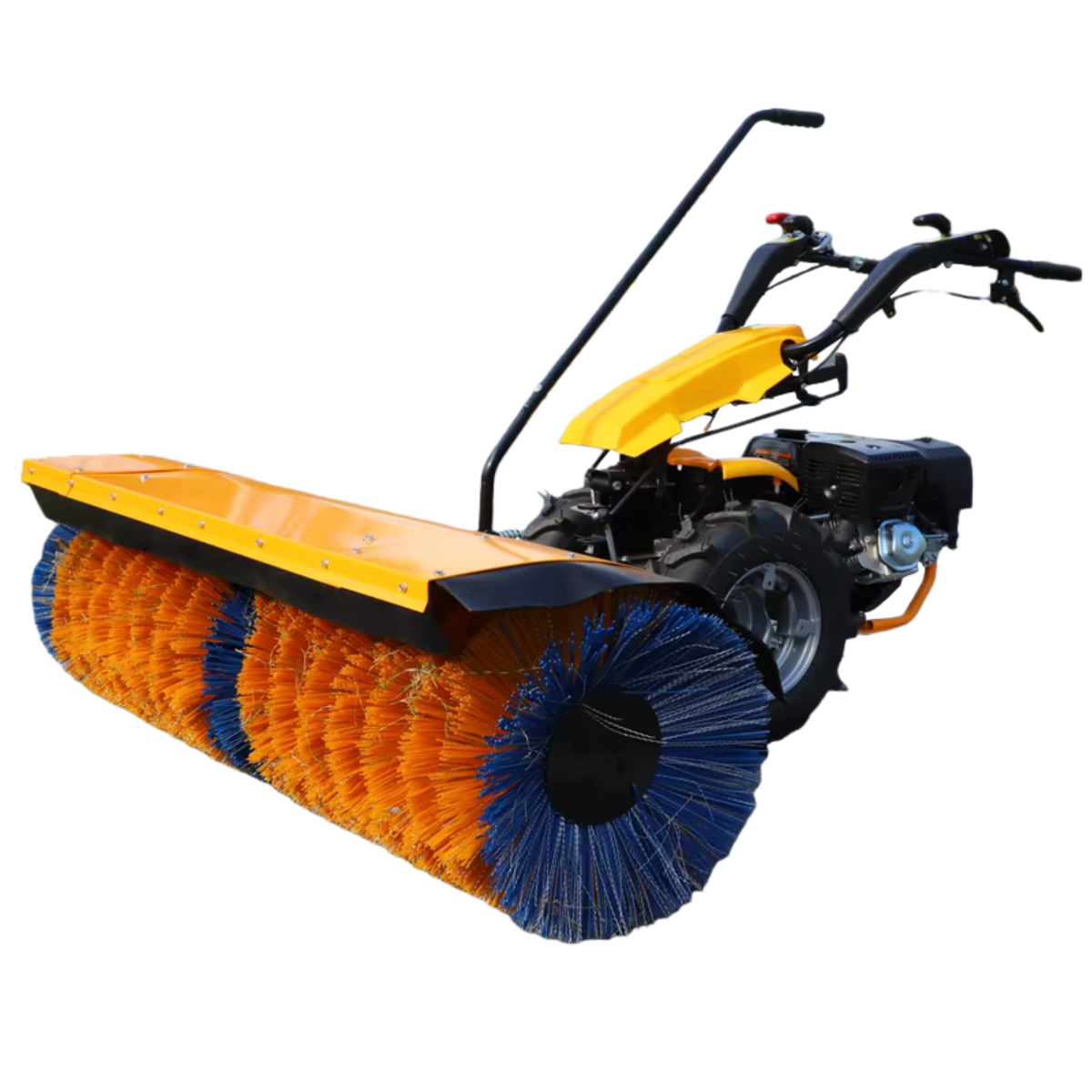
KINGO ANDA describes its Snow Sweeper, P002, as a rotating brush attachment for sidewalks, yards, estates and light commercial snow clearing. Its Snow Blade, P003, is an adjustable blade for clearing walkways, yards and property access routes. These are the verified starting points for the comparison.
The descriptions do not provide a tested snow-depth threshold, a surface-damage guarantee, a clearing-rate comparison or an approved packed-snow capability. “Adjustable” does not establish the available angle settings or adjustment mechanism. A product photograph also cannot establish which wear-edge materials are available for the quoted model.
Keep three headings on the comparison sheet: published feature, buyer requirement and supplier response. Put “rotating brush” and “adjustable blade” under published features. Put expectations such as a particular finished surface condition under buyer requirements. Leave the response open until it is supported by model-specific information; do not present the buyer’s expectation as an established capability.
Make surface condition a separate selection question
“Paved sidewalk” is not a complete surface description. Record the material, joints, transitions and visible condition at the locations the equipment must cross. Include photographs of uneven sections, covers, thresholds and decorative areas. Ask the property owner which surfaces have special restrictions and who can approve the proposed equipment for them.
For a sweeper inquiry, ask the supplier to identify the brush supplied with the exact configuration and provide its documented application limits. For a blade inquiry, request the supplied contact-edge specification and any approved alternatives. Do not promise a softer brush or alternative edge merely because another manufacturer’s range includes one.
Record restrictions as questions requiring answers, not as operating advice. For example: “Is this proposed configuration approved for the pictured paving and joint condition?” is more useful than assuming a brush cannot mark a surface. Questions about contact adjustment, clearance or operating technique belong with the model’s instructions and the responsible site team.
If the supplier cannot confirm an important surface requirement, mark that combination as unresolved. A quotation can remain conditional while the parties obtain the needed information; it should not quietly turn uncertainty into a suitability claim.
Describe snow conditions and the permitted destination
Give the supplier the site’s expected snow conditions using observations where available. Distinguish fresh accumulation from material already moved or compacted by traffic. State the planned service windows and any known variation along the route. These details help frame the assessment; they are not a substitute for the manufacturer’s application limits.
Do not use a universal rule such as “brush for light snow, blade for heavy snow” as the final buying decision. The public JGAD descriptions do not establish that dividing line. Ask whether each proposed model is suitable for the stated conditions, which situations fall outside its intended use and what documentation supports the answer.
Identify where cleared material is permitted to go. Show entrances, pedestrian crossings, parked-vehicle areas and route ends on the site plan. Available space beside a path should not automatically be treated as an approved placement area. Ask the site’s responsible contact to define the boundary, then ask the supplier to assess the proposed configuration against it.
Measure narrow openings and turning areas along the work and transport route. Request the overall dimensions of the complete quoted configuration in the relevant approved positions. Attachment width alone does not answer whether the equipment can pass a gate or reach storage.
Compare complete configurations before approving the order
The Multifunction Power Unit, P001, is described as a main unit for interchangeable front and rear attachments across winter and warm-season work. The product information explicitly directs buyers to confirm attachment compatibility by inquiry. A shared catalog is not evidence that every brush or blade fits every power-unit version.
Ask for a line-by-line package definition: power-unit identifier, attachment identifier, connection hardware and any separately required components. When the buyer already owns equipment, provide the model label and connection-area photographs. Have the supplier confirm the exact combination rather than accepting a general statement that the attachment is “compatible.”
- Technical acceptance: record the confirmed surface, snow-condition and route requirements, together with limitations and unanswered questions.
- Supplied items: identify the equipment, hardware and documents included in each quoted configuration.
- Service information: request the applicable parts identification and maintenance instructions; confirm the actual supplied brush or blade edge before discussing replacement items.
- Commercial terms: request pricing and packaging for the defined package. Keep requested OEM labeling or document-language arrangements subject to confirmation.
If a sample evaluation is needed, agree on the questions it should answer and follow manufacturer-approved conditions and instructions. Record the exact configuration, observed conditions and unresolved issues. One observation should not become a general claim about clearing speed, surface protection or performance in a different snow condition.
Frequently asked questions
Will a snow sweeper always protect decorative paving?
No such guarantee appears in the public P002 description. Provide the surface details and restrictions, and request model-specific suitability information before making that commitment.
Is the snow blade approved for packed snow?
The public P003 description establishes an adjustable blade for walkways, yards and property access routes, but does not establish packed-snow performance. Ask for the exact model’s documented application limits.
Should a dealer quote both attachments as one package?
Only when the buyer’s requirements justify both and the proposed combinations are confirmed. Define what each item is intended to address; do not present a second attachment as an automatic solution to an unverified application.
To prepare a comparison, contact KINGO ANDA with the surface photographs, route measurements, expected snow conditions, equipment identifiers and quantity. Request a quotation that clearly separates confirmed specifications from points still awaiting approval.