Industry Products
Attachment Compatibility Tables for Dealer Quote Pages: What Buyers Need to See
Dealers quoting walk-behind power units should show compatible snow, soil and utility attachments with fit notes, support parts and RFQ data.
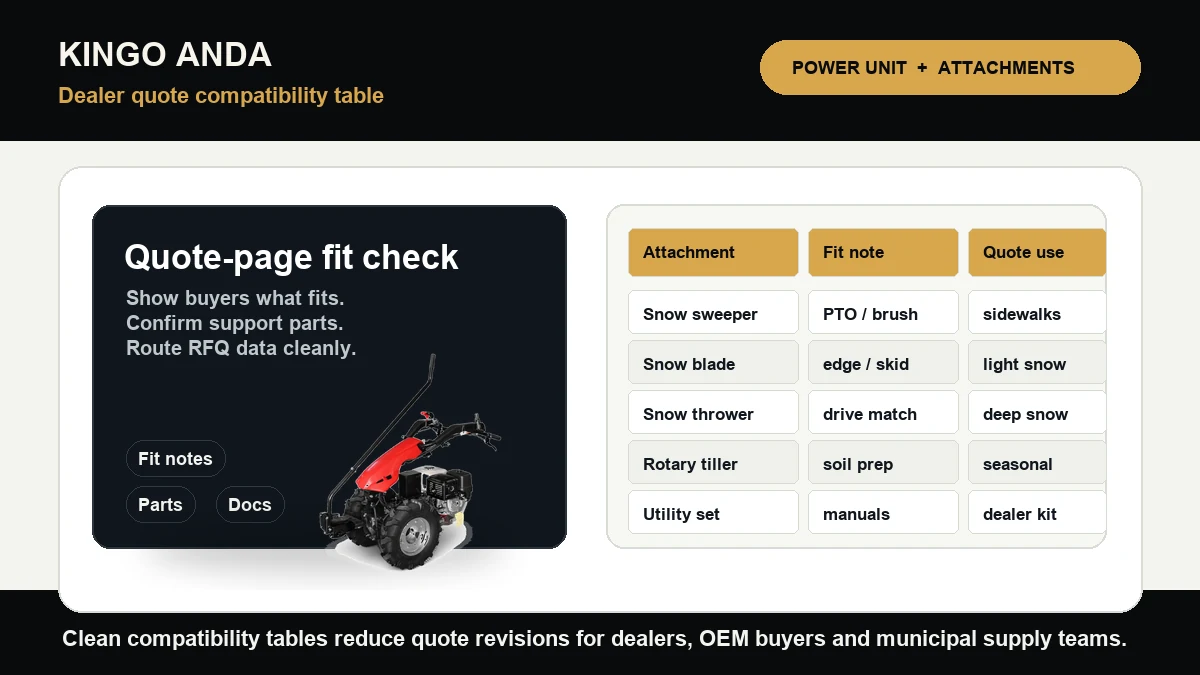
A dealer quote page has one job that a brochure often fails to do: reduce the number of questions before a buyer asks for a formal price. When the product is a walk-behind power unit with several snow, soil and grounds-care attachments, that means the page has to show compatibility clearly. A buyer should not have to guess whether a sweeper, blade, thrower, tiller or utility attachment fits the same power unit.
The best pages in this category do not hide that information. BCS America points buyers to a compatibility chart and a configurator so they can connect tractor models, attachments and required accessories. Ventrac groups a broad attachment lineup by use case and backs the equipment section with support resources, serial-number guidance and parts access. The lesson for a smaller B2B factory site is straightforward: quote pages should behave like purchasing tools, not poster pages.
Compatibility belongs above the quote button
Many equipment pages show a large image, a headline and a contact button. That is enough for a simple product, but it is thin for a modular equipment system. If a dealer is quoting one power unit with several attachments, the buyer needs to see the relationship before clicking the form. Otherwise every inquiry starts with the same preventable questions: which attachment fits, which parts are required, what width is available and whether the dealer can support the package after delivery.
For KINGO ANDA, the compatibility table should sit close to the main product story on the power unit and attachment sections. It does not need to be complicated. A practical table can show attachment name, working width, use case, compatible power unit, support parts, document status and buyer note. The point is not to publish every engineering detail on the public page. The point is to prove the factory and dealer understand how the package is built.
Start with the buyer’s job, then show the model fit
A compatibility table should not start as a warehouse SKU list. It should start with the buyer’s job. Snow-removal buyers usually think in routes: narrow sidewalks, campus entrances, brick pavers, curb ramps, light accumulations, wet snow or deeper storms. Grounds-care buyers may think in soil preparation, mowing, sweeping, leaf handling or utility transport. Dealers think in packages they can stock, demonstrate, service and reorder.
That is why the first column should be the application, not just the attachment code. A snow sweeper belongs with sidewalks, hard surfaces and light-to-medium accumulation. A snow blade belongs with pushing and surface scraping, with notes for scraper edges and skid shoes. A compact thrower belongs where discharge distance and heavier snow matter. Soil and mowing attachments belong in the same table because they explain year-round utilization for dealers who do not want winter-only inventory.
This builds on the earlier KINGO ANDA article about walk-behind tractor attachment compatibility before sample orders. Sample-order checks are still necessary, but the public quote page should filter obvious mismatches before the sample is even requested.
List required accessories and support parts
Compatibility is not only whether two pieces connect. It also includes the items needed to make the package sellable and serviceable. BCS specifically notes that some attachment choices may require a larger engine or additional accessories. That is the correct commercial mindset. A table that says “fits” without support notes can still create dealer problems later.
For a dealer-facing KINGO ANDA table, support notes should include wear parts, guards, belts, scraper edges, skid shoes, spare fasteners, manuals, packing notes and any attachment-specific service items. If a buyer is building a winter package, the quote should connect to a dealer spare-parts starter kit. If the buyer is municipal or institutional, the quote should also connect to the RFQ document package.
This approach protects the dealer. It also helps the factory. A clear table reduces back-and-forth, makes model names consistent across quotes and cartons, and gives the sales team a standard way to ask for missing information.
Make the table useful for OEM and private-label buyers
OEM buyers need one more layer: which parts of the package are standard, which can be private-labeled and which documents must be locked before artwork. A compatibility table can handle this if it includes columns for label status, manual status and packing note. The buyer can then see which attachment set is ready for a pilot order and which set still needs confirmation.
Do not make this page sound like a retail accessory shop. For B2B buyers, the strongest wording is operational: compatible attachment set, sample order, model matrix, support parts, manuals, warranty boundary, packing file and quote path. Those phrases match how dealers and OEM buyers actually evaluate a package. They also give the sales team better inquiry data than a generic “contact us” form.
The dealer RFQ checklist should be linked directly below the table. If the buyer cannot complete the full table, the RFQ checklist tells them what to send next: buyer type, market, application, target attachment set, annual volume, document needs and deadline.
Keep the page simple enough to maintain
The mistake is trying to publish a perfect catalog table that nobody updates. A quote page needs a table that the factory can maintain every season. Start with the core packages: power unit plus snow sweeper, snow blade, compact snow thrower, rotary tiller, mower and utility attachments. Mark unclear combinations as “confirm before quote” instead of forcing a yes or no.
For each row, keep the note short: use case, working width, fit condition, support part and document status. If a dealer needs more, the sales team can send the full spec file after the inquiry. The public table should qualify the lead; the private quote file should close the details.
Dealers, OEM buyers and municipal suppliers can send the target power unit, attachment set, buyer type and expected order volume through Build Your Package. KINGO ANDA can then prepare a quote path with compatible attachments, support parts and document requirements instead of starting from a blank email.
Build the table before the quote.
Send the target application, power unit, attachment set and buyer type. KINGO ANDA can prepare the right compatibility matrix for dealer or OEM review.
Industry references checked: BCS America compatibility chart update, Build Your BCS configurator, BCS snow-removal attachments, Ventrac attachment lineup, Ventrac support resources.