Dealer Operations / Customer Handover
Walk-Behind Snow Equipment Customer Handover Checklist
A practical dealer handover record for the exact power unit, attachment, controls, manuals, wear parts and first service contact.
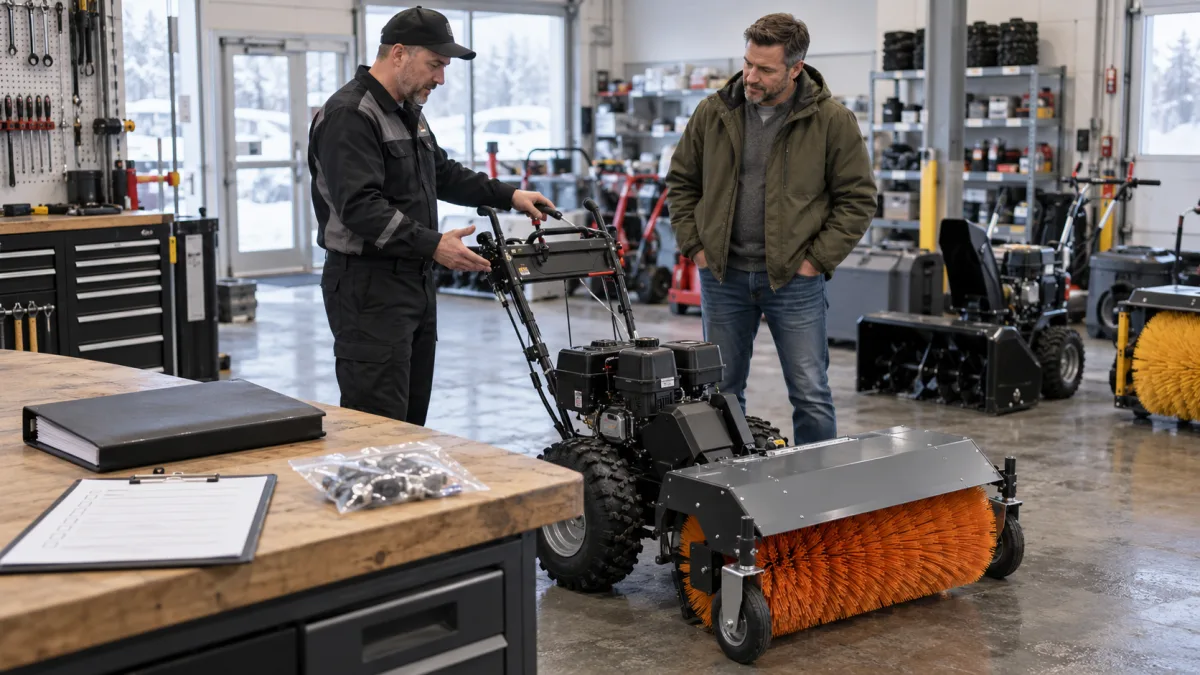
Customer handover is the last point at which a dealer can confirm that a compact snow equipment package makes sense to the person who will use it. The purchase order may be correct and the machine may have passed pre-delivery inspection, yet the customer can still leave without the right manual, spare brush reference or a clear service contact.
A walk-behind snow equipment customer handover checklist should tie the delivered power unit and attachment to a named recipient. It should record what was shown, which documents were supplied, which items remain open and how the buyer will reach support. The checklist is an operational record, not a claim that every future site condition has been tested.
Confirm the delivered configuration before the demonstration
Begin with the order number, model names, serial or batch identifiers where present, attachment type and the dealer’s stock reference. Compare these with the invoice, packing list and approved quotation. Record whether the customer receives a snow sweeper, blade, compact thrower or more than one attachment. Include the interface kit, mounting hardware and any agreed transport or storage accessories.
Photograph the assembled package and the identity plates. If an attachment was changed after the original quotation, note the replacement and who approved it. A handwritten product family name is not enough when later parts orders depend on an exact version or interface.
The dealer should complete the separate pre-delivery inspection checklist before inviting the customer to accept the equipment. Handover is where that inspection record is connected to the customer and the final supplied package.
Show controls and attachment changes under the right conditions
Use the correct model manual to plan the demonstration. Identify starting and stopping controls, drive engagement, attachment engagement, emergency or release functions where fitted, adjustment points and the safe way to isolate the machine before cleaning or changing an attachment. Demonstrate only where the site and equipment permit it; a showroom explanation may need a separate supervised field demonstration.
Have the recipient repeat the essential control sequence or explain it back. Record which functions were demonstrated live and which were reviewed from the manual because weather, space or site conditions did not allow a practical test. Do not mark an unperformed operation as completed.
For a sweeper, discuss brush contact and surface protection using the specific equipment instructions. For a blade, cover edge and skid adjustment. For a compact thrower, cover discharge direction and obstruction-clearing procedures. These are different attachments, so a single generic script is inadequate. The attachment compatibility guide helps confirm the power unit and mounting interface before handover.
Hand over manuals, parts references and the service route
List every document actually supplied: power-unit operator manual, attachment manual, parts list, maintenance schedule, warranty terms and any language-specific version agreed in the order. Record the revision or file name when possible. A link sent by email is useful only if the recipient can open the right document, so test the link or provide a clearly named offline copy where that is the agreed method.
Identify first-season wear items and their part references: brush sections, cutting edges, skid shoes, belts, fasteners or other items relevant to the supplied package. Do not assume the customer has received a spare kit unless it appears on the order and the packing list. Record what was included and what can be ordered later.
Give one clear route for service: dealer contact, working hours, equipment identity required when calling, and how a fault or parts request should be documented. The Parts & Service page is the standing support entry; local dealer arrangements and warranty decisions should be confirmed in the sales documents rather than invented at the handover bench.
Record limits, open items and customer acceptance
A handover form should make exceptions visible. Examples include a manual still being translated, a spare part on back order, an accessory to be delivered separately or a field demonstration scheduled for another day. Give each open item an owner and expected follow-up method. Avoid a blanket “complete” signature when the record itself shows missing materials.
| Handover field | Record to keep | Release question |
|---|---|---|
| Package identity | Order, model, serial or batch, attachment and interface kit. | Does it match the accepted quotation? |
| Condition | Pre-delivery record and dated final photos. | Are any discrepancies still open? |
| Controls | Functions shown, location and recipient name. | Was the actual demonstration completed? |
| Documents | Manuals, parts list, warranty terms and revisions. | Can the buyer access the right files? |
| Support | Dealer contact and first parts-order route. | Is the next action clear? |
If a receiving issue remains open, link the customer file to the dealer receiving discrepancy report. A carrier claim, a dealer repair and customer acceptance are separate records. The recipient should see the final disposition and any agreed follow-up before signing.
Keep the record useful after the first snowfall
Save the signed handover record with the equipment identity, inspection sheet, final photographs and document list. Give the customer a copy. After first use, the service desk should be able to locate the supplied attachment version and the demonstration notes without reconstructing the order from email threads.
For dealers preparing multiple seasonal packages, make the checklist version-controlled and leave room for model-specific steps. The Outdoor Power Equipment Institute’s product standards listing is a useful reminder that outdoor power equipment is governed by product-specific standards; it is not a replacement for the instructions supplied with the exact machine.
Plan the package and its support file together.
Send the power-unit model, attachment mix, destination market and dealer support requirements. KINGO ANDA can organize the package references and documentation points for buyer review.
Editorial reference: OPEI product standards listing. The actual operator manuals, agreed sales documents and applicable local requirements govern each delivered machine. Featured image is a generated editorial illustration of a dealer handover, not a photograph of a KINGO ANDA delivery.