Soil Preparation / Dealer Sourcing
Rotary Tiller Attachment for Walk-Behind Power Units: A Dealer Checklist
Compare rotary tiller attachments for walk-behind power units with a dealer checklist covering site conditions, model fit, sample testing and support documents.
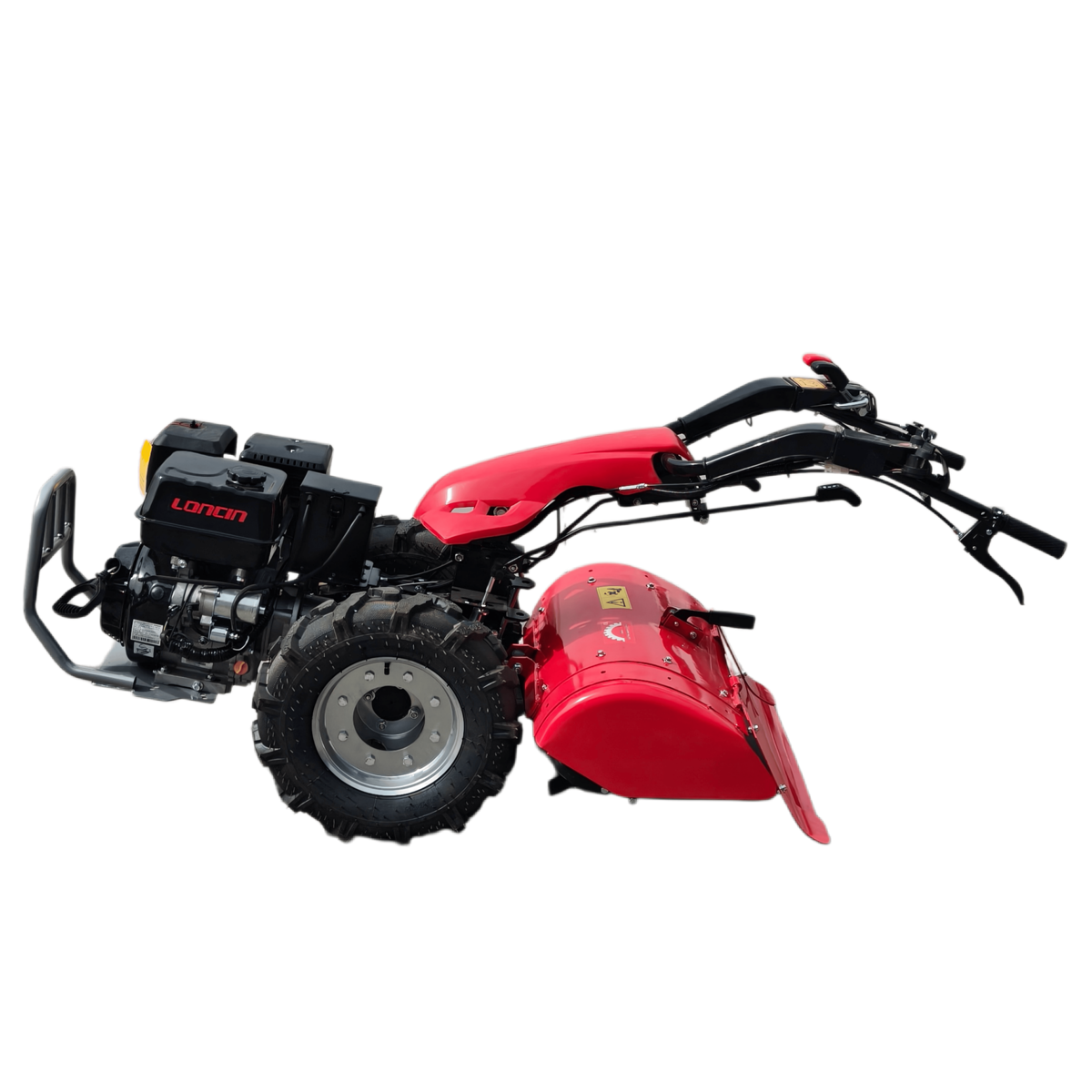
A dealer can list a rotary tiller in a catalog with one product photo. Quoting the right attachment takes more information. The buyer’s soil, working space, power-unit model and intended job all affect the questions a supplier must answer before a sample or stocking order makes sense.
KINGO ANDA lists its Rotary Tiller (product code P012) as a soil-preparation attachment for gardens, small farms and row-crop work. Its public product information does not give a universal compatibility claim or a fixed commercial package; attachment fit, packaging and pricing are confirmed by inquiry. This guide turns that limitation into a practical dealer checklist: document the job first, then request a model-specific answer.
Define the soil-preparation job before comparing attachments
“Rotary tiller attachment” is a useful search term, but it is not a complete specification. A garden-bed buyer, a small-farm operator and a row-crop buyer may work in different spaces and expect different results. Ask the buyer to describe the area to be prepared, the current ground condition, the intended crop or planting task and whether the work is a first pass or recurring maintenance.
Record the narrowest access point as well as the open working area. Gates, planted edges, irrigation hardware, raised beds and turning areas may matter as much as the size of the plot. Photos with a measured reference are more useful than an estimate such as “a small field.” A dealer should also ask about stones, roots, buried services and surface debris, because these can change the suitability and setup conversation. The aim is to describe conditions for factory review, not to promise an output from an untested configuration.
If the buyer expects to use the machine for several jobs, separate the tilling requirement from any winter or grounds-care work. That distinction helps the dealer build a coherent power-unit and attachment package instead of assuming that one configuration covers every task.
Confirm the exact power unit and attachment interface
KINGO ANDA presents its Multifunction Power Unit (P001) as a main unit for interchangeable front and rear attachments across winter and warm-season work. That describes the product family; it is not proof that P012 fits every version of every walk-behind unit. The manufacturer states that attachment compatibility is confirmed by inquiry.
For a new equipment package, put the proposed power-unit model and rotary-tiller model on the same quotation. Ask the supplier to identify the mounting interface, any required adapter or connecting hardware, and which items arrive with the power unit versus the attachment. If the customer already owns a machine, request the model label and clear photographs of the connection area before quoting the tiller.
Do not substitute a generic “fits walk-behind tractors” statement for written model confirmation. A reseller may be asked to support the unit long after the initial sale. A quote that records the precise matched configuration is easier to service and reorder than one that names only the attachment family.
Use a sample to answer the questions a catalog cannot
A sample order is most valuable when the buyer and dealer agree on what it must establish. Choose a representative work area, record the soil and site conditions, and note the power unit and attachment identifiers used in the test. Keep the operator instructions and setup material supplied for that configuration with the test record.
Observe handling through the buyer’s real access points and turning spaces. Record whether the attachment setup is understood, what adjustment or maintenance questions arise, and which parts the dealer would need to identify if a customer called later. The sample should also reveal any transport and storage constraints that do not appear in a product image.
One successful demonstration is not a performance guarantee for different soils, operators or power-unit combinations. Avoid turning a sample note into a claim about working depth, speed, area covered or service life unless the manufacturer has verified that claim for the exact model and conditions. Keep observations attached to the test conditions so a later buyer can interpret them correctly.
Put documentation and parts into the buying decision
A dealer’s first order is not only a machine purchase. It creates future questions about setup, identification and service. Before approving a rotary-tiller package, request the documents available for the specific attachment and matched power unit: operator instructions, setup guidance, a parts list, wear-item identification and the warranty or support process. If the documents are not ready, record that openly in the quote instead of implying that a complete file set exists.
The KINGO ANDA Parts & Service page describes the company’s intended catalog, manual and parts-support path. It is a useful starting point for a request, but the exact deliverables for an order should be confirmed with the supplier. Dealers preparing an OEM or private-label program should also specify the required document language, product label, carton marks and approval record before a larger order is placed.
Separate the initial product quote from the recommended support stock. A dealer can ask which replacement items are appropriate for the planned first season, but quantities and part numbers should come from the confirmed model and supplier documentation, not from another attachment’s list.
Send an RFQ that the supplier can actually answer
A concise request for quotation gives the factory enough context to confirm fit and commercial terms without several rounds of avoidable questions. Dealers can use the following fields as a starting point:
| RFQ field | Information to provide or request |
|---|---|
| Application | Garden, small-farm or row-crop work, plus the specific soil-preparation task. |
| Site conditions | Photos, soil description, obstacles, access widths and available turning space. |
| Power unit | Existing model and label photos, or the model proposed for a complete package. |
| Attachment | Rotary Tiller P012 and the requested model-specific compatibility confirmation. |
| Connection and setup | Mounting method, required hardware, supplied items and setup documents. |
| Commercial package | Sample quantity, expected follow-on volume, packaging and labeling needs. |
| Support | Available manuals, parts information, warranty path and first-season service items. |
Mark any unresolved field “supplier confirmation required.” That is more useful than filling a gap with an assumed dimension or a photograph-based guess. For a broader warm-season line, dealers can review the Soil & Mowing category, then request model-by-model confirmation rather than treating the category as a compatibility chart.
Frequently asked questions
Does the KINGO ANDA rotary tiller fit any walk-behind power unit?
No universal fit is stated on the public product page. Provide the exact power-unit model and request written confirmation of the attachment match and required connecting hardware.
What should a dealer check before ordering a sample?
Define the actual soil-preparation job and site conditions, identify the power unit, ask what connection and setup items are included, and agree on the documents and observations needed from the sample test.
Are price, packaging and support parts fixed on the product page?
The product page directs dealer and OEM buyers to inquire about pricing, packaging and compatibility. Ask for a model-specific quote that also identifies the available documentation and parts-support path.
Dealers and OEM buyers can contact KINGO ANDA with the site photos, intended power-unit model, sample quantity and support-document requirements. The supplier can then confirm the attachment configuration and commercial package for that order.