Dealer Training / Parts Support
Preseason Snow Equipment Dealer Training Packets: Manuals, Videos and Wear-Part Lists
A dealer guide to preseason snow equipment training packets, covering manuals, short videos, wear-part lists, safety topics and support handoffs.
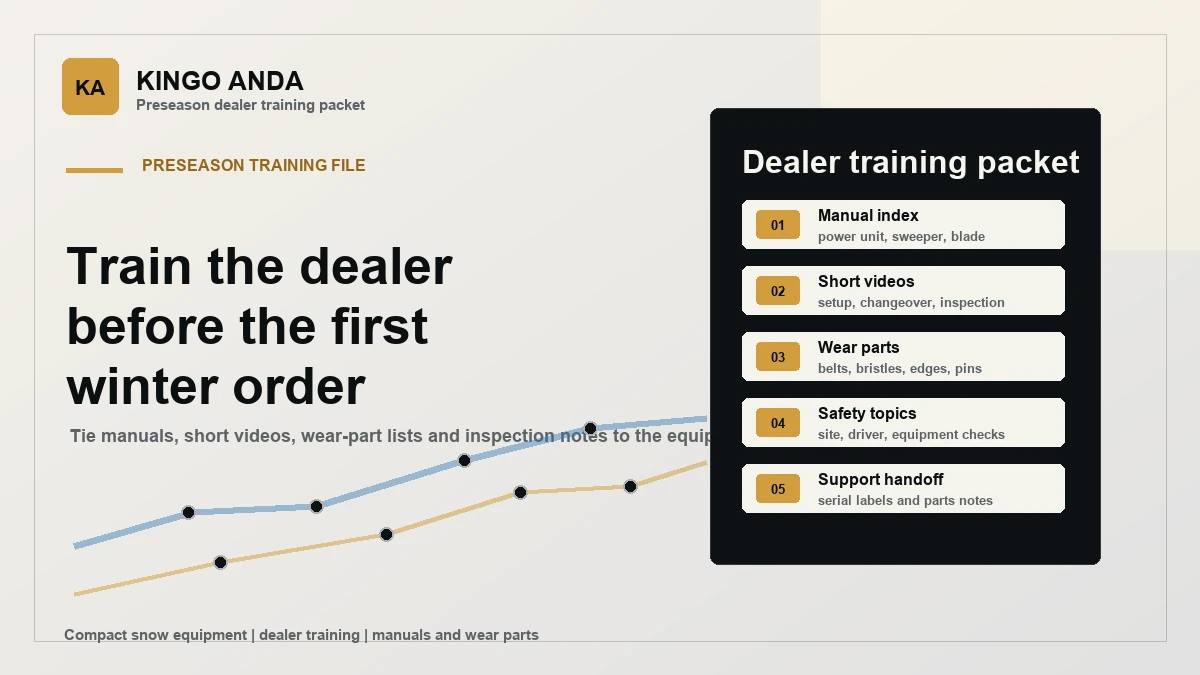
A dealer training packet is usually judged too late. The machines arrive, the first winter order is already on the floor, and the sales team starts asking for a manual, a quick setup video, a wear-part list and a clearer answer on which attachment fits which customer. By then the dealer has product, but not enough repeatable knowledge to sell, service and reorder it with confidence.
For compact snow equipment, preseason training should be built around the actual dealer job. A counter person needs part names and serial-label rules. A sales rep needs clean comparison language for a sweeper, blade and thrower. A service technician needs the first inspection path and the common wear items. A dealer principal needs a simple stocking view before winter traffic starts.
The 2026 OPE dealer survey coverage from OPPAA and Rural Lifestyle Dealer keeps coming back to the same commercial point: parts and accessories are not side business. They shape retention, service workload and margin. That is why a dealer support packet should not be a folder of files. It should be a working tool for the first selling season.
Build the packet around the first 30 days
The best training packets start with the dealer’s first month, not the factory’s full product history. In those first weeks, the dealer needs to receive the product, identify the model, explain the package, answer compatibility questions, inspect the attachment and place a sensible spare-parts order.
For KINGO ANDA-style compact equipment, the packet should open with the walk-behind power unit, then branch into winter attachments such as snow sweepers, snow blades and compact throwers. Each item should have a one-page sales note, a short setup checklist, an operator-facing warning summary and a small parts list. A 40-page manual still matters, but it cannot be the only training object.
Separate manuals from selling notes
Manuals are written to protect operation, service and warranty clarity. Sales notes are written to help the dealer explain the right package to the right buyer. Mixing those jobs makes both weaker. Sno-Way’s public service center shows the right direction: manuals, application guides, service videos and dealer resources are distinct entry points, not a single download pile.
A dealer packet should therefore include two layers. The first is the formal file set: manual, spec sheet, installation or setup note, warranty terms, parts diagram and packing information. The second is the field layer: what to say when a buyer asks whether a snow sweeper can clear a narrow campus sidewalk, when a blade is enough, or when a thrower is worth the added complexity.
Use short videos for changeover and inspection
Short video clips are useful when they answer a narrow question. A five-minute product presentation is not as valuable as a 45-second clip showing attachment mounting points, belt inspection, chute adjustment, bristle wear, scraper-edge replacement or safe shutdown before service.
SIMA’s snow and ice resources put training, downloads and best-practice content close to the center of the industry conversation. Snow Plow News also covered SIMA’s Safety 1st program, with sidewalk and snowplow operator training built around safety, equipment use and storm readiness. A manufacturer does not need to copy a professional certification program, but it should learn the shape of useful training: specific task, clear audience, repeatable behavior.
Make wear parts visible before the first order
The wear-part list should be in the packet before the dealer asks for it. For compact snow attachments, the list usually starts with bristles, scraper edges, skid shoes, belts, pins, cables, fasteners, shear protection, bearings and high-use electrical or control parts. The exact list depends on the model and attachment, but the principle is fixed: do not let the dealer discover first-season parts after the first machine is sold.
| Packet item | Dealer job it supports | What to include |
|---|---|---|
| Quick model guide | Sales and counter identification | Model name, serial-label position, package photo and attachment family. |
| Setup checklist | Receiving and demo preparation | Inspection steps, fastener checks, fluid or belt notes and first-start checks. |
| Changeover video | Sales demo and service handoff | Short clips for mounting, removing and checking each attachment. |
| Wear-part list | Parts counter and preseason stock | Part names, quantities, reorder trigger and model compatibility. |
| Support path | Warranty and repeat orders | Contact route, required photos, serial number and issue description. |
SIMA’s preseason preparation guidance is practical on this point: create a parts list, order early and keep key supplies available before winter pressure arrives. M-B Companies takes the same operational view in its support flow by tying manuals and assistance to equipment identification details such as serial numbers. Dealers need those habits before the season, not after a service problem.
Connect training to reorder and warranty flow
A dealer training packet should close with what happens after the first customer order. Where does the dealer send a warranty question? What photos are needed? Which serial number matters? Which attachments share wear parts, and which do not? Which files should be sent to a municipal or property-maintenance buyer before approval?
This is where training becomes commercial infrastructure. A clean packet shortens sales calls, improves first-season service confidence and gives the dealer a reason to reorder from the same supplier. It also protects the manufacturer from vague claims because the expected inspection, parts and document flow has already been defined.
Build a dealer training packet before winter orders ship.
Send your target market, attachment set, planned stocking quantity and support-document requirements. KINGO ANDA can prepare a compact equipment training path for dealer, distributor or OEM programs.
Editorial references: Rural Lifestyle Dealer 2026 OPE parts and accessories coverage, OPPAA 2026 OPE Dealer Survey resource notice, SIMA preseason snow equipment preparation guidance, SIMA training and resource overview, Snow Plow News coverage of SIMA Safety 1st training, Sno-Way service center and manuals navigation and M-B Companies after-sales service and manuals support. Image source: locally generated KINGO ANDA editorial graphic, owned site asset.