Winter Attachments / Dealer Sourcing
Ice Breaker Attachment for Compacted Snow: A Dealer Quoting Checklist
A dealer checklist for quoting an ice breaker attachment for hard-packed winter routes, including surface fit, compatibility, support files and RFQ details.
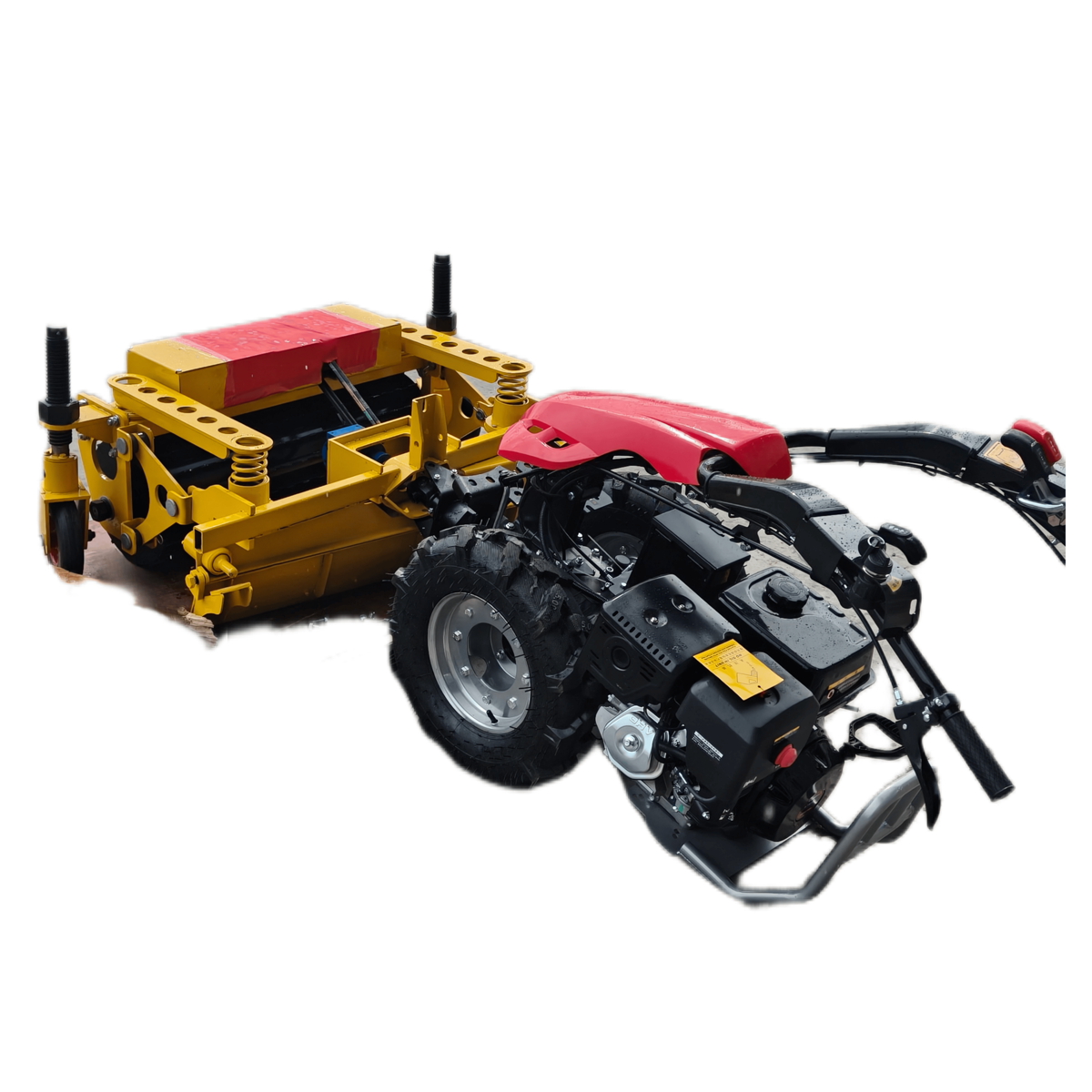
A useful ice-breaker quotation starts with a route description and a power-unit model, not just an attachment name. For dealers and property-maintenance buyers considering compacted-snow work, the key questions are whether the proposed configuration suits the surface, what the manufacturer permits for that model, and which support documents accompany the order. A product photo cannot answer those questions.
This checklist helps dealers define those requirements before pricing a sample unit or winter attachment package. It is designed to reduce vague requests and keep compatibility, surface conditions and after-sales documents visible in the quotation.
Start with the surface, not the attachment name
The KINGO ANDA Ice Breaker is presented as a winter attachment for access routes and hard-packed surfaces. That gives the buyer a starting point, but it does not replace a route assessment. “Compacted snow” can describe a thin layer on a paved entrance, repeated vehicle packing on a service lane or a harder buildup on a shaded walkway. Each case can place different demands on the attachment and the surface beneath it.
Before a dealer recommends a configuration, the buyer should document the route material, typical buildup, available working width, slopes, curbs, drainage features and any surface that could be damaged by aggressive contact. Photos taken during actual winter conditions are more useful than a clean summer site plan. If the route includes decorative paving, coated concrete or exposed utility covers, those areas should be identified separately in the RFQ.
Define the ice breaker’s job in the clearing sequence
An ice breaker should be evaluated within a route plan, not presented as a universal answer for every snow condition. Ask the manufacturer whether the proposed task and surface are suitable for the exact model, and what clearing steps would be required before and after its use. Any sequence involving loose-snow removal, treatment of the packed layer and subsequent material removal needs model-specific confirmation. This checklist is a buying brief, not an operating procedure.
That sequence affects the attachment package. A rotating Snow Sweeper is intended for sidewalks, yards, estates and light commercial snow clearing. An adjustable Snow Blade is intended for walkways, yards and property access routes. Which attachment follows the ice breaker depends on the route, the material being moved and the buyer’s operating plan. Dealers should describe the proposed sequence in the quote instead of leaving the operator to discover it after delivery.
Confirm power-platform compatibility in writing
Attachment fit must be confirmed for the exact power platform being ordered. KINGO ANDA offers a Multifunction Power Unit for interchangeable front and rear attachments across winter and warm-season work. However, the public product information also states that attachment compatibility is confirmed by inquiry. Dealers should therefore avoid treating a general product-family match as proof that every attachment fits every model or configuration.
The quotation should identify the power-unit model, attachment model, connection method, required hardware and any setup items that are supplied separately. If the buyer already owns a unit, request a model plate photo and clear images of the connection area. If the order includes a new power unit, place the compatible attachment list on the same quotation so that the approved package remains traceable.
Build an RFQ that exposes the missing information
A useful dealer RFQ does more than ask for a price. It gives the factory enough information to confirm a workable package and shows the buyer which details still need approval.
| RFQ field | Why it matters |
|---|---|
| Route type and surface | Separates ordinary pavement from sensitive or irregular areas. |
| Typical packed-layer condition | Clarifies the buyer’s actual winter problem without making unsupported performance assumptions. |
| Working-width limits | Accounts for gates, sidewalks, parked vehicles and storage access. |
| Power-unit model | Allows attachment compatibility to be confirmed against the ordered or installed platform. |
| Required follow-up attachment | Defines how loosened snow or ice will be moved after the breaking pass. |
| Wear and service items | Lets the dealer request a first-season parts recommendation and service documents. |
| Packaging and labeling | Keeps dealer, OEM and private-label requirements visible before order approval. |
Where a specification is not yet confirmed, mark it as “factory confirmation required.” Do not fill gaps with a measurement copied from another model or with an assumption based on a product photo.
Include the support package in the quote
A winter attachment becomes difficult to support when the dealer receives the machine but not the information needed for setup, inspection and parts identification. Before order approval, request the available operator material, attachment setup guidance, parts list, wear-item identification and warranty process. The dealer should also confirm which hardware ships with the attachment and which items belong to the power unit.
For sample orders, the handover record should include photos of the delivered connection points, attachment label and supplied hardware. This creates a baseline for later questions and makes it easier to distinguish an installation issue from an application mismatch. For a larger dealer or OEM program, the same information should be organized into a repeatable document pack rather than rebuilt for every shipment.
Use the sample to validate the route plan
A sample evaluation should follow the supplied operator instructions and manufacturer-approved conditions for the exact model. Record the route surface, buildup condition, approved attachment sequence, operator observations and any wear or service questions. Do not proceed with a surface or task whose suitability remains unconfirmed. The goal is not to create a performance claim from one test; it is to identify unresolved configuration and documentation questions before stocking decisions expand.
Dealers preparing an ice breaker package can contact KINGO ANDA with the power-unit model, route description, required attachments, sample quantity and labeling needs. Compatibility, packaging and commercial terms should be confirmed in the quotation for the specific order.
Frequently asked questions
Is an ice breaker the same as a snow blade?
No. KINGO ANDA lists them as separate attachments. The ice breaker is positioned for hard-packed winter surfaces, while the adjustable snow blade is positioned for clearing walkways, yards and property access routes. The correct sequence and attachment combination should be confirmed for the buyer’s site.
Can the ice breaker fit every KINGO ANDA power unit?
Do not assume universal fit. The public product pages state that attachment compatibility is confirmed by inquiry. Dealers should provide the exact power-unit and attachment models and request written confirmation in the quote.
What should a dealer request with a sample order?
Request the confirmed attachment match, supplied connection hardware, available setup and operator documents, parts information, packaging details and a clear process for reporting sample-test questions.