English trade-editorial updates from KINGO ANDA
Dealer Snow Removal Equipment Programs: What to Stock Before Winter Routes Start
Dealers can plan snow-removal attachment programs before winter by locking fit, wear parts, demos and reorder paths around real route demand.
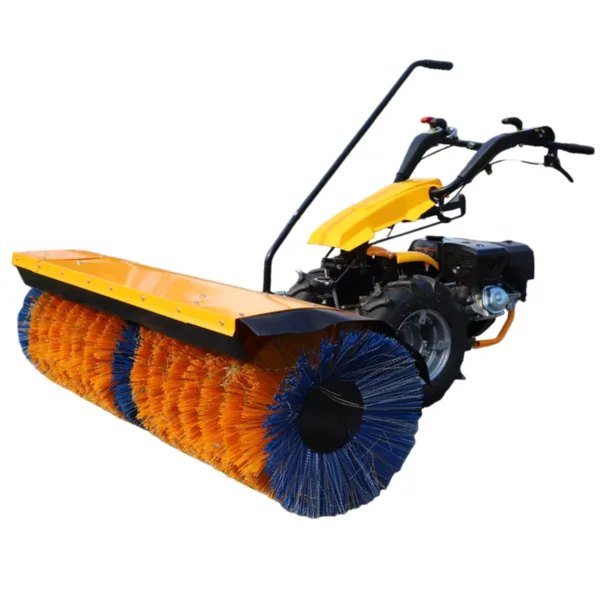
The first day of the 2026 SIMA Snow & Ice Symposium is a useful reminder for dealers: winter equipment decisions are not made in winter. They are shaped during the summer, when contractors, municipal crews and property-maintenance buyers are reviewing last season, walking the show floor, checking inventory and deciding which equipment lines deserve space before the first storm.
That is the right timing for a dealer snow removal equipment program. A dealer does not need to stock every attachment in a supplier catalog. The stronger move is to define one or two repeatable packages, confirm the parts path behind them, and make sure the sales team can explain where each tool fits on real routes.
For walk-behind power equipment, this matters more than usual. Buyers are not only comparing the machine. They are comparing whether a compact platform, the snow attachment, the wear parts and the supplier support can hold together through a messy season.
Why June is already preseason for snow dealers
Public works and commercial snow operators use the warm months to review what failed, what stayed productive and what has to be ready before fall. Recent APWA coverage made that point plainly: winter operations are treated as a year-round program, not a last-minute scramble. The same discipline applies to dealers that want snow equipment sales to be more than a seasonal rush.
The practical window is short. By the time contractors start chasing equipment after the forecast turns, the best packages, parts and demo slots may already be spoken for. Dealers that wait until cold weather often end up selling whatever is left. Dealers that plan in June can build a cleaner story: this is the route type, this is the attachment set, this is the wear-part list, and this is how the buyer reorders before storms stack up.
That is a stronger sales position than a generic snow equipment brochure.
Build the package around the route buyer
A sidewalk contractor, a campus maintenance crew and a small municipal team may all ask for snow equipment, but they do not buy for the same reason. The route buyer should decide the package.
For narrow sidewalk work, a snow sweeper or a push and sweep 2-in-1 attachment can make sense when the buyer needs cleaner pavement, faster passes and less dependence on large machines. For heavier accumulation or windrow cleanup, a dealer may need to compare that against a compact thrower or a blade. The point is not to make one attachment win every route. The point is to make the salesperson explain the route fit before price takes over.
The dealer should also decide which buyer language belongs on the quote. A contractor may care about labor time and service calls. A municipal buyer may ask about training, route coverage and repeatability. An OEM or private-label buyer may care about sample approval, carton data, manuals and how the same platform supports more than one seasonal SKU.
Separate display inventory from storm-critical parts
Many dealers think about inventory as units on the floor. Snow programs need a second list: storm-critical parts.
Brushes, belts, scraper edges, shear pins, cables, fasteners and common service parts are not exciting, but they decide whether a buyer trusts the line after the first storm. A dealer that sells a snow attachment without a basic parts plan is selling a risk. A dealer that can say, “Here is the attachment, here is the normal wear list, here is what we keep on hand, and here is the reorder path,” sounds like a supplier instead of a reseller.
This is where the Parts & Service conversation should start before the season, not after a breakdown. The dealer should know which parts are shared across attachments, which are unique to each tool, and which items should be stocked locally because a late shipment during a storm is not acceptable.
What to confirm before sample orders
Sample orders should be treated as program tests. Before a dealer accepts a sample, the supplier should be able to answer four basic questions.
First, which base units and attachments are truly compatible without improvised adapters? Second, what documents will come with the sample: specs, operating notes, carton information, spare-parts references and image assets? Third, which parts should be stocked with the first sales push? Fourth, what changes if the buyer wants private label, regional packaging or a mixed snow-removal kit?
If those answers are vague, the dealer is not ready to scale the line. If they are clear, the sample becomes more useful than a product photo. It becomes a small version of the whole dealer program.
Use a narrow package to make the first sale easier
The first package should be narrow. A walk-behind power unit, one lead snow attachment, one alternative attachment for route comparison, and a defined parts kit is easier to sell than a wall of choices.
For KINGO ANDA, a dealer might start with a compact snow-removal package around the multifunction power unit, the push and sweep 2-in-1 attachment, and a comparison path to the snow sweeper or blade. That gives the buyer enough choice without turning the conversation into a catalog review.
The package can then expand once the dealer knows what buyers ask for in the field. If customers keep asking about scraper edges, stock those. If they ask about heavier snow, compare the thrower. If they ask about year-round use, connect the same platform to mowing, tilling or cleanup attachments. The first program should create a repeatable buying path, not a one-time equipment quote.
A better dealer question before winter
The best question is not, “How many snow products can we list?” It is, “Which package can our sales and service team support without improvising during the first storm?”
Dealers and OEM buyers building a winter line can use KINGO ANDA’s Dealer Support path to compare package options, then send the target route type, attachment mix, annual volume and parts requirements through the contact page. A cleaner preseason package usually produces a cleaner winter sale.
Dealer package
Need a preseason snow-removal package with parts support?