Storage / Dealer Support
Walk-Behind Power Unit Attachment Storage Plans for Dealers Before Winter
A dealer guide to storing walk-behind power units and attachments before winter: fuel, moisture, labels, kits and staging notes.
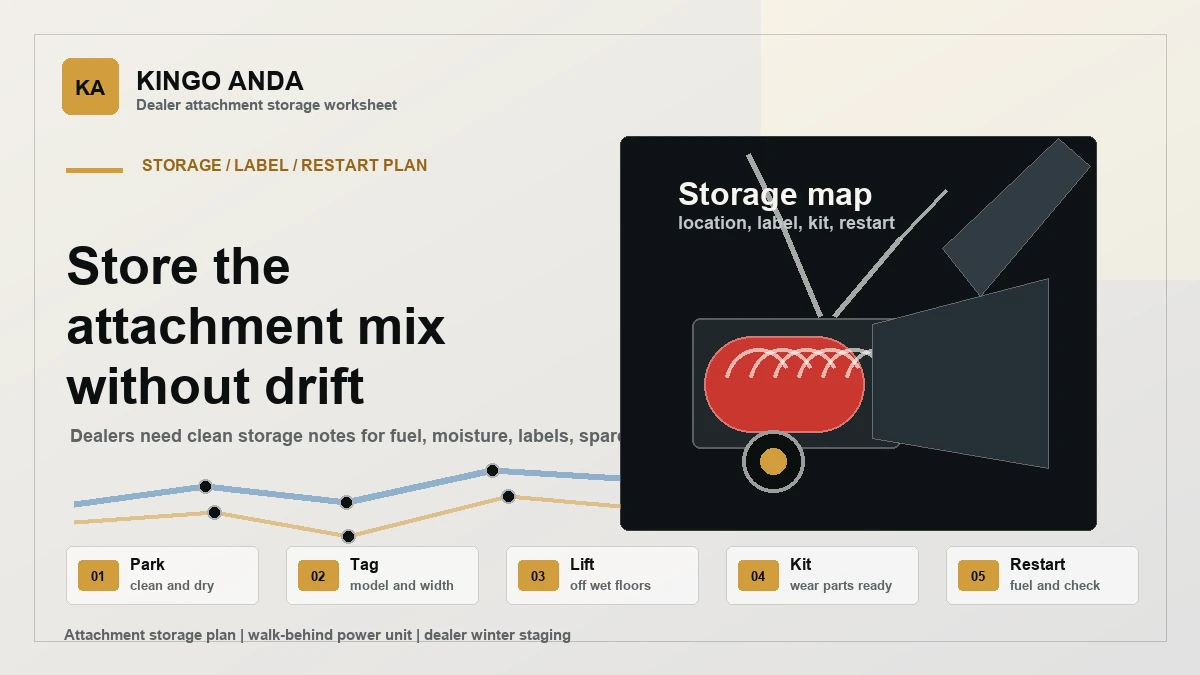
A dealer attachment storage plan is a record of product identity and order status, not a substitute for model-specific storage instructions. Before winter staging, dealers can organize the power units and attachments they hold, record what is known and route any preparation, support or commercial questions to the supplier for the exact configuration.
KINGO ANDA lists a Multifunction Power Unit for interchangeable front and rear attachments across winter and warm-season work. Its public products include a Snow Sweeper, Snow Blade and Compact Snow Thrower. Pricing, packaging and attachment compatibility are confirmed by inquiry, so a storage map should not assume that a group of items forms an approved package.
Store product identity with the item
Record the product identifier, the configuration under discussion, the order or sample reference and the physical location where the dealer has placed the item. If a power unit and attachment are being considered together, list both identifiers. This prevents a team from treating a familiar-looking item as a confirmed configuration.
Use clear photos of labels and connection areas when the dealer needs to request product-specific guidance. A storage label can help a team locate an item, but it does not prove compatibility, included components or customer approval. Keep those questions in the associated quote or support record.
Separate storage records from operating instructions
Fuel, battery, cleaning, moisture protection, lifting and restart questions depend on the exact product and applicable instructions. Do not create a generic storage procedure from a dealer worksheet. Instead, record the question, identify the model and request the relevant manufacturer information for the proposed item.
A factual storage record can show what was observed, when the item was last reviewed and which documents or support materials are still required. It should not certify that a unit is ready to operate, that a component is serviceable or that a particular preparation step is correct.
Keep winter attachments and commercial details distinct
Dealers may hold products for samples, display, customer review or future quotation. Record the intended status of each item without assuming it is reserved, available or already assigned to a buyer. A storage map is a useful internal tool, but commercial availability, packaging and order terms require current confirmation.
For example, a Snow Sweeper, Snow Blade and Compact Snow Thrower may be listed as separate products in a dealer record. The record should not state that they fit the same power unit or ship together unless the supplier confirms the exact configuration. This prevents an internal storage label from becoming an unsupported sales claim.
Use a package record for sample and quote review
When a dealer wants to discuss a possible package, collect the product identifiers, buyer market, intended channel, quantity, photos and questions needing confirmation. The same record can include any requested documents, parts-information questions, packaging needs or branding requirements. This creates a clean handoff between the warehouse, sales and supplier contact.
| Storage field | Dealer record | Supplier confirmation needed |
|---|---|---|
| Item identity | Product identifier, label photo and location. | Product-specific configuration details. |
| Proposed package | Power unit and attachment identifiers under review. | Compatibility and included-item information. |
| Internal status | Sample, display, review or quotation context. | Current commercial availability and order terms. |
| Support request | Documents, parts questions and storage-related queries. | Relevant materials for the exact proposed item. |
| Commercial brief | Market, buyer type, quantity and packaging requirements. | Current pricing, packaging and quotation response. |
Route questions to the right record
Use Parts & Service for product-specific support questions. Use Dealer Support or contact KINGO ANDA for dealer, sample, OEM or quotation requests. Include the exact product identifiers, the information already recorded and the points requiring confirmation.
Review before using a storage record as a sales file
Before a storage note is used in a customer conversation, compare it with the current supplier response. This makes it clear which product details are confirmed and which still need review. A good dealer file is traceable, but it does not overstate the condition, compatibility or commercial status of the items in storage.
Frequently asked questions
Does a storage label confirm that an attachment fits a power unit?
No. Attachment compatibility is confirmed by inquiry for the exact proposed configuration.
Can a dealer create fuel or restart instructions from a generic storage plan?
No. Follow the instructions applicable to the exact product and request model-specific guidance where needed.
What should be included in a dealer storage record?
Include product identifiers, location, configuration questions, item status, support requests, buyer context and any commercial details requiring supplier confirmation.