Dealers / Parts Support
Dealer Spare-Parts Reorder Sheets for Snow Sweepers, Blades and Throwers
A dealer guide to spare-parts reorder sheets for snow sweepers, blades and compact throwers, covering wear items, stock timing and support files.
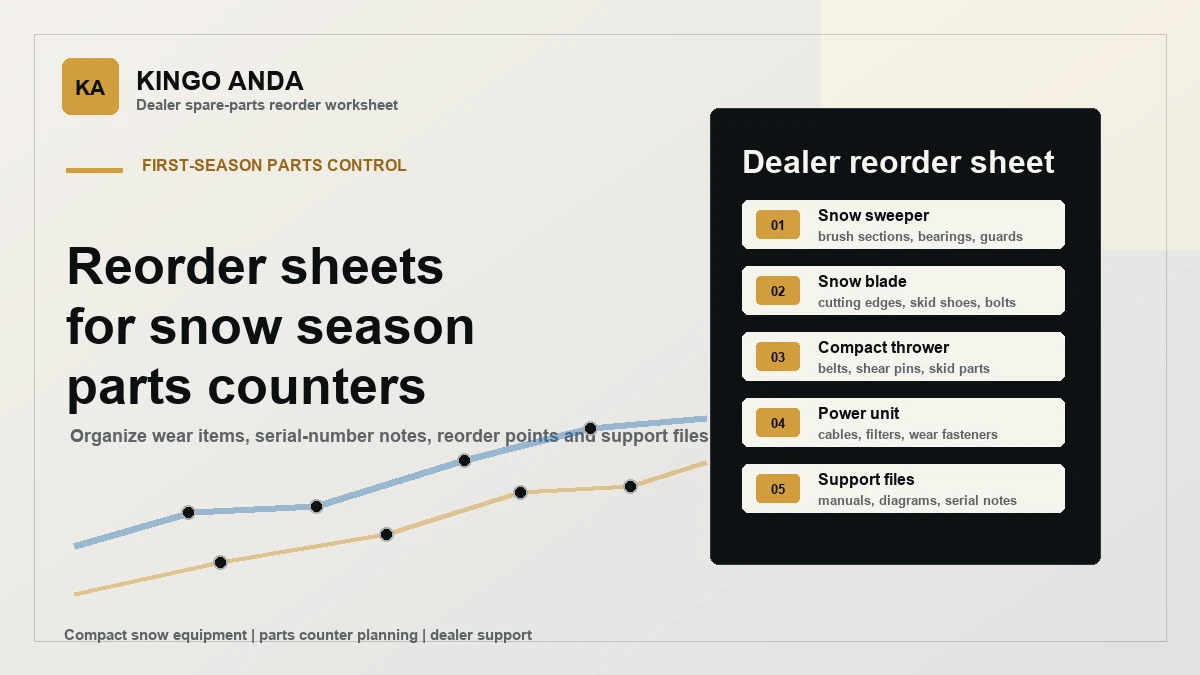
A snow-equipment dealer can sell the right machine and still lose the customer in February if the parts counter is not ready. That is especially true for compact walk-behind packages, where one power unit may be sold with a sweeper, blade, thrower, brush mower or grounds-care attachment, and each combination creates a different service question.
The reorder sheet is the plainest answer. It is not a marketing brochure. It is a working page for the dealer, distributor or OEM buyer that lists the common wear items, minimum stock, reorder trigger, serial-number field, lead time, support file and contact path for each attachment. It keeps the first winter from becoming a string of urgent messages that could have been prevented in preseason.
Recent OPE channel coverage makes the point clearly. Rural Lifestyle Dealer’s 2026 dealer survey coverage and OPPAA’s resource page both put parts and accessories at the center of dealer profitability and retention. Snow and ice equipment adds a harder clock: if a part is missing during a storm cycle, the lost time is visible to the end customer immediately.
Treat the parts counter as part of the winter program
Compact snow equipment should not be delivered as machine-only inventory. A dealer program should include machine stock, attachment stock, service files and a first-season parts plan. Government Fleet’s winter-equipment preparation guidance says parts rooms need to adjust winter availability before the season, and SIMA’s preseason maintenance guidance makes the same operational point for fleets: parts and supplies have to be ready before the rush.
For KINGO ANDA, the practical B2B move is to make the reorder sheet part of every dealer quote. A buyer ordering snow sweepers should see brush sections, bearings, guards and related fasteners. A buyer ordering a snow blade should see scraper edges, skid shoes, trip hardware and mounting fasteners. A compact thrower package should carry belts, shear pins, skid parts and any drive-side wear items that affect uptime.
Build the sheet around wear items, not model names
Model names are useful for sales, but they are not enough at the counter. The dealer needs to know what wears first, what stops the route, what can wait until scheduled service, and what has to be ordered in advance because it is too specific to improvise locally.
| Attachment group | Common reorder fields | Dealer note |
|---|---|---|
| Snow sweeper | Brush section, shaft/bearing, guard, belt, fastener kit. | Record working surface, debris load and average operating hours. |
| Snow blade | Cutting edge, skid shoe, bolt kit, spring or trip hardware. | Separate concrete, paver, asphalt and rough-surface routes. |
| Compact thrower | Belt, shear pin, skid part, chute control, cable and scraper item. | Track wet snow, icy buildup and throwing-distance complaints. |
| Power unit | Control cable, filter, wheel/tire part, drive fastener, seasonal service kit. | Keep engine/platform service items separate from attachment items. |
| Dealer documents | Manual, parts diagram, serial label, packing photo and warranty note. | Make each line easy to match with a future claim or reorder. |
This structure also helps sales teams. When a dealer asks for a mixed winter package through attachments, the quote can show not only the equipment set but the first-season support set. That makes the offer easier to compare against a supplier who only sends model photos and unit pricing.
Separate preseason stock from storm-week replenishment
A reorder sheet should have two numbers, not one. The first is preseason stocking quantity: the amount a dealer wants in the building before the first serious weather window. The second is the reorder trigger: the level that tells the counter to place another order before the shelf is empty.
That distinction matters because snow demand is compressed. A landscaping part can sometimes wait. A snow sweeper brush, blade edge or thrower belt often cannot. BOSS’s parts guide emphasizes part numbers, manuals and diagrams as tools for getting the right replacement part. SnowEx’s parts and service page makes the same support pattern visible with manuals, parts guides and maintenance videos. Dealers should expect that level of file discipline from compact equipment suppliers as well.
Add serial-number and document fields
The most useful reorder sheet is also a support record. Add fields for model, serial number, attachment type, original invoice, customer name, preferred stocking location and the matching manual or parts diagram. It is a small administrative step, but it prevents the familiar winter problem where a buyer sends a photo and expects the parts team to identify the exact item under pressure.
This is where parts and service pages need to do more than say “contact us.” They should tell dealers what to send: serial-label photo, attachment photo, operating hours, surface type, failed part location and requested delivery timing. The same requirements belong in dealer support material so distributor staff can train new counter people before the season opens.
Use the reorder sheet as a dealer support asset
A good reorder sheet does not have to be complicated. It has to be consistent. Each equipment family should show the first five to ten support items, the documents attached to the sale, the parts that should be kept locally and the parts that should be ordered from the factory with more lead time.
For KINGO ANDA, this is also a trust signal. Many factories can show product photos. Fewer can show the operating system behind the product: packing proof, serial-label practice, first-season spares, manuals, parts diagrams and a clear quote path. That is the difference between a product inquiry and a dealer program.
Prepare a dealer package with parts support built in.
Send your target attachment mix, expected annual unit volume, snow-season service model and stocking preference. KINGO ANDA can prepare a compact equipment quote with first-season spare-parts planning.
Editorial references: Rural Lifestyle Dealer 2026 OPE parts and accessories survey coverage, OPPAA dealer resources, Government Fleet winter equipment preparation guidance, SIMA preseason snow equipment preparation guidance, BOSS replacement-parts guide and SnowEx parts and service library page. Image source: locally generated KINGO ANDA editorial graphic, owned site asset.