Industry News
Dealer Spare-Parts Starter Kits for Compact Snow Equipment
A practical spare-parts starter kit helps compact snow equipment dealers quote, service and restock sweepers, throwers and blades before winter.
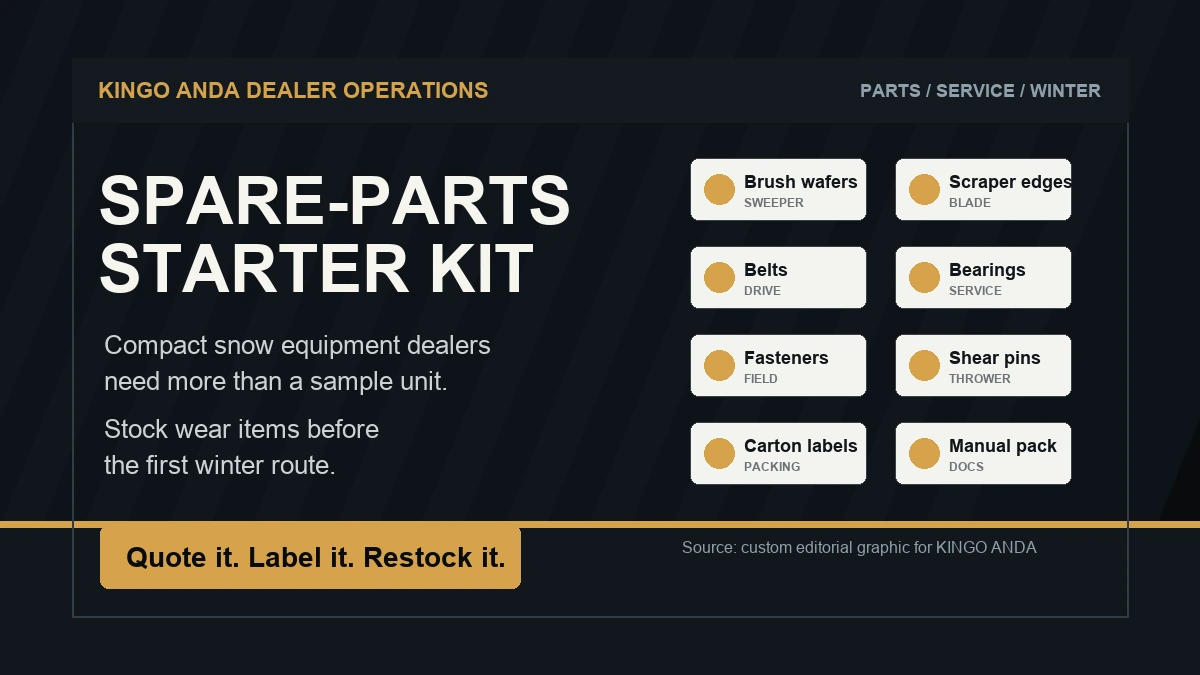
A spare-parts starter kit is not a box of leftovers. For a dealer handling compact snow equipment, it is the difference between selling a winter package and supporting that package when the first route fails in bad weather. The machine sale starts the relationship, but the wear parts decide whether the buyer trusts the dealer after the first storm.
That is why the starter kit belongs in the first commercial conversation, not after the container is already packed. If the dealer is quoting a snow sweeper, compact snow thrower, snow blade or multi-attachment power unit, the quote should also answer a simple service question: what parts will the dealer need on hand before winter work begins?
Why parts planning is moving into the front of the quote
The aftermarket is carrying more weight in equipment channels. Rural Lifestyle Dealer reported that more than half of surveyed dealers expected parts revenue to rise at least 2 percent in 2026, and service revenue expectations were also broadly positive. That does not mean every dealer should overstock. It means the parts conversation is no longer a back-room detail.
Outdoor power equipment dealer metric guides also put service revenue, parts and accessory sales, customer retention and inventory turnover close to daily management. Those numbers turn a parts kit into a working capital question: too little stock slows service, but random stock ties up money in parts that do not move.
Snow equipment makes the problem sharper because demand arrives in a narrow window. A municipal buyer, campus maintenance team or property contractor may accept a delayed attachment shipment in July. They will not be patient when a scraper edge, belt, bearing or brush component is missing in January.
What belongs in a dealer starter kit
The exact list depends on the attachment mix, but the logic is consistent. The kit should cover the parts most likely to be damaged, consumed, misplaced or needed during first service. It should not try to be a full warehouse.
- For sweepers: brush wafers or brush sections, side wear items, guard hardware and the fasteners most likely to be removed during adjustment.
- For compact throwers: shear pins, belts, scraper or skid items, common bearings and small hardware that can stop a repair if missing.
- For blades: scraper edges, skid shoes, pivot hardware and visible fasteners that take route abuse.
- For power units: belts, cables, filters, common service hardware and labels needed for dealer handover.
A useful first kit also includes a document pack. The parts list, exploded view, carton label file and basic service notes should travel with the parts, not sit in a separate email thread. Large snow brands make this visible by keeping parts, manuals, service libraries and dealer support paths close to the product experience. BOSS Genuine Parts, SnowEx service publications and Blizzard parts and service all present support as part of the buyer’s operating path, not as an afterthought.
Size the kit from route risk, not from a fixed percentage
Many factories default to a percentage of order value when they suggest spare parts. That is simple, but it is not always useful. A dealer ordering a few demo units needs a different kit from a distributor preparing preseason stock for multiple service counters.
The better method starts with the route and customer type. Sidewalk sweepers working around curbs, pavers and mixed debris need different wear coverage from a thrower sold for cleaner snow conditions. Campus and municipal buyers usually care about downtime and documentation. Rental or contractor channels need quick part identification and a stocking list that a counter employee can use without calling the factory.
For first orders, KINGO ANDA buyers should separate three groups: demo parts, first-service parts and reorder parts. Demo parts keep the sample unit presentable. First-service parts protect the first buyer deliveries. Reorder parts are the items the dealer should replenish after early season sales reveal the actual pattern.
Make the kit easy to sell and easy to restock
The strongest starter kit is labeled in dealer language. Part names should match the catalog. Each bag or carton should connect to the model and attachment family. The dealer should be able to look at a part, find the item number, confirm the fit and quote the replacement without rebuilding the answer from photos.
This is also where packaging work matters. The article on compact snow equipment packaging for dealers covers carton marks and label discipline in more detail. The same principle applies here: if the warehouse cannot identify the kit quickly, the customer-facing support promise becomes weak.
A starter kit should also connect back to the Parts & Service page and the Dealer Support path. Dealers need a route for catalog files, spec sheets, manuals, sample-order questions and replenishment. The parts kit is only useful if the support path is obvious after the first shipment.
How to request a KINGO ANDA starter kit
When requesting a quote, buyers should send the target market, first attachment set, expected annual volume and the type of dealer support needed. A snow-focused package may start with a sweeper, thrower and blade mix. A year-round equipment channel may combine snow removal with mowing, tilling or utility attachments.
From there, the starter kit can be built around the real first shipment rather than a generic parts percentage. That gives the dealer a cleaner showroom story, a better first-service plan and a stronger reorder path before winter pressure exposes the gaps.
Build a dealer-ready winter package.
Send the attachment mix, target buyer type and expected volume. KINGO ANDA can prepare the equipment quote, document set and starter-parts recommendation together.
Industry sources checked for this article: Rural Lifestyle Dealer 2026 dealer revenue outlook, BOSS Genuine Parts support page, Ideal Computer Systems dealership metrics guide, SnowEx service publications and Blizzard parts-service library.